Review · MADEIRA
Madeira: Birdwatching – The Endemics
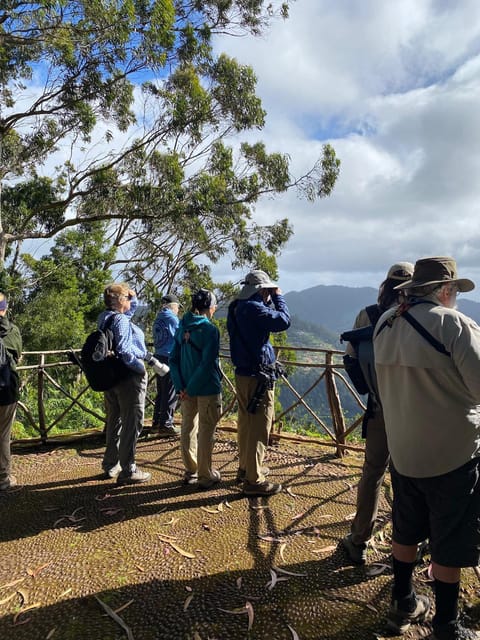
Madeira’s birds feel personal. This 4.5-hour outing takes you to Important Bird Areas where you can track Madeira’s endemics, including the Madeiran Firecrest and the elusive Laurel pigeon, with stops such as the São Lourenço peninsula and the laurel forest. I like that the tour is built around real habitat and timed observation, not just a quick look-and-go, and I also like that you get included observation material for better viewing. One possible drawback: birding depends on weather and movement, so you may not get the full set every day.
I also love the pacing and the human side of it: a live guide (English or Portuguese), a small group limited to 8, and pickup in Funchal so you can spend the time outside instead of figuring out routes. If you’re expecting an easy, stroller-friendly walk, this one is more about comfortable shoes, patience, and listening as much as scanning.
In This Review
- Key things you’ll notice on this endemic bird tour
- Madeira endemic birds: why this tour feels different from casual birding
- São Lourenço peninsula: where you scan for Madeiran Firecrest
- Laurel forest Important Bird Area: your best shot at Laurel pigeon
- Other land sites and observation points: why the route works
- Your guide and the small-group setup (up to 8 people)
- What’s included: observation material and guided time at each site
- Price and value: is $64 per person fair for 4.5 hours?
- What to bring and wear for comfortable, real-world birding
- Where pickup and drop-off fit (Funchal and Caniço)
- Who should book this tour (and who might not love it)
- Should you book Madeira Birdwatching: The Endemics?
- FAQ
- How long is the birdwatching tour?
- Where is the pickup location?
- Is there pickup and drop-off outside Funchal and Caniço?
- How many people are in the group?
- What languages is the live guide available in?
- Do you include birdwatching or observation materials?
- Which endemic birds are the tour focused on?
- What should I bring?
- Are alcohol and drugs allowed?
- Is the tour suitable for children?
Key things you’ll notice on this endemic bird tour
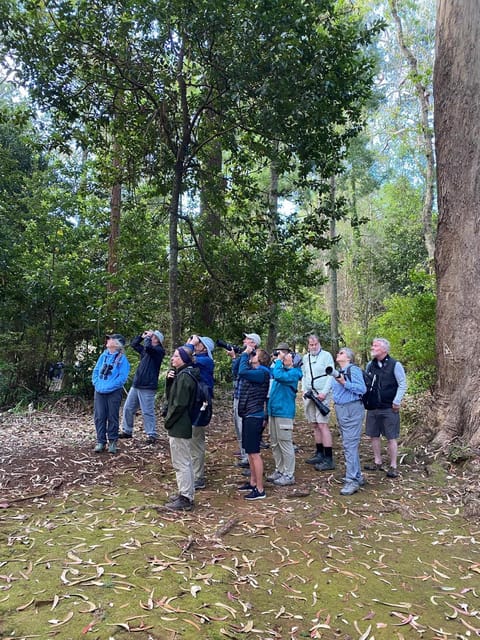
- Endemics target list: Madeiran Firecrest, Laurel pigeon (Trocaz), and Madeiran Chaffinch are the headline birds.
- IBA-driven route: You visit recognized Important Bird Areas including São Lourenço and the laurel forest.
- Multiple spots, not one viewpoint: You’ll have several places to walk through or sit and watch.
- Observation gear included: You don’t have to show up fully equipped to start seeing better.
- Small group format: Limited to 8 participants for quieter concentration and easier help with ID.
- Real-world guidance: Your guide talks birds and habitat as you move between sites.
Still deciding? Set this one beside a few island favourites first.
- From Funchal: Ecological Catamaran Dolphin Whale Watching★ 4.5 · 8,204 reviews
- Madeira: Skywalk, Porto Moniz, Seixal, and Fanal 4WD Tour★ 4.9 · 7,905 reviews
- Funchal: Dolphin and Whale Watching Catamaran Cruise★ 4.5 · 5,697 reviews
- Funchal: Enchanted Terraces, Porto do Moniz & Fanal 4WD Tour★ 4.8 · 4,930 reviews
Madeira endemic birds: why this tour feels different from casual birding
Madeira is small, but its birds are not ordinary. Many of the island’s best-known species evolved to live in narrow habitats here, so the experience is less about adding birds to a list and more about understanding where they fit on the island. That’s exactly what this tour is designed for: multiple Important Bird Areas and a focus on the endemic species people come to Madeira to see.
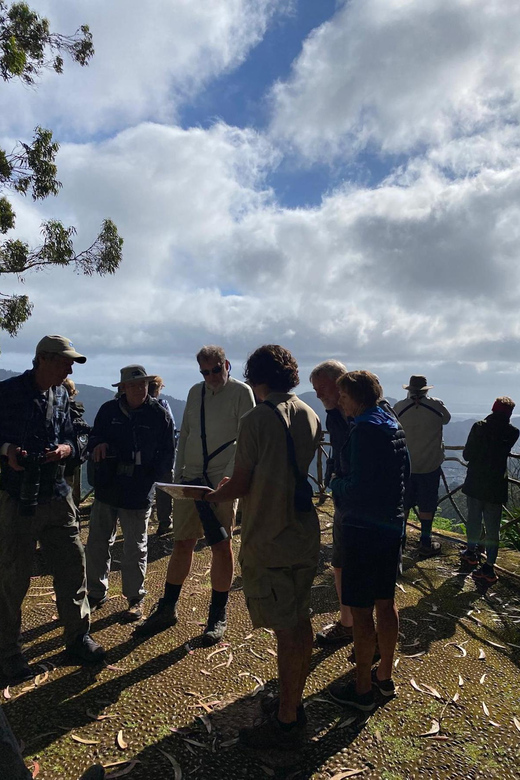
I like that you’re not left alone with a pair of binoculars and a prayer. You get a live guide and time at several observation points, which matters because birdwatching is half skill and half luck. Even a great day can be slow if birds are tucked away, and even a plain day can turn productive if you’re in the right habitat at the right moment.
One practical mindset: go with the expectation of learning. If you’re watching for specific endemics like Firecrest or Laurel pigeon, you’ll get much more out of the tour by paying attention to what your guide points out—calls, feeding behavior, and the kind of vegetation you’re scanning.
São Lourenço peninsula: where you scan for Madeiran Firecrest
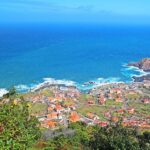
São Lourenço is the kind of place that makes birdwatchers happy because it combines open vantage points with enough habitat variety to get your eyes working. On this tour, it’s one of the named Important Bird Areas, and it’s a strong setting for the Madeiran Firecrest—one of the island’s most sought-after endemics.
How it typically feels:
- You’ll spend time at land sites with a mix of walking through and stopping to watch.
- You’ll be checking movement in trees and shrubs and watching for quick bursts of activity rather than slow, obvious birds.
- Your guide’s job is to help you interpret what you’re seeing, not just point in a direction.
A bonus from past outings: one guest described a walk along a levada with lots of flowers, with Firecrest being the standout. You might not get the exact same details every day, but it shows the tour can involve both bird-focused scanning and short habitat walks—good for breaking up the monotony of standing still.
What to consider: if the weather is worse than expected or visibility is limited, birds may stay deeper in cover. That’s not a tour failure; it’s just how birdwatching works on a windy island. Still, the value of coming here is that the habitat is right for the species you’re targeting.
Laurel forest Important Bird Area: your best shot at Laurel pigeon
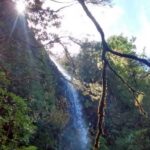
If São Lourenço is where you start scanning fast, the laurel forest Important Bird Area is where the experience turns into listening and patient observation. This is where many people hope to connect with the Laurel pigeon—often called Trocaz pigeon—and it’s one of Madeira’s most famous and elusive endemics.
Why this stop matters:
- The laurel forest is the kind of habitat that supports species adapted to forest conditions.
- Many birds don’t announce themselves visually; they show up through sound, stillness, and brief appearances.
- Spending time in one well-chosen habitat is more productive than bouncing randomly between viewpoints.
On a good outing, the group can pick up multiple endemics across different spots, and one person specifically mentioned seeing a pair of Trocaz pigeons at another location while also spotting the Madeiran Bluefinch. Even if you don’t get that full combo, the laurel forest stop is where your odds concentrate for the birds that are hardest to find.
The tradeoff is time and mood. Laurel forest birdwatching usually isn’t nonstop action. You may sit, adjust your position, and wait. Bring your attention, not just your camera.
Other land sites and observation points: why the route works
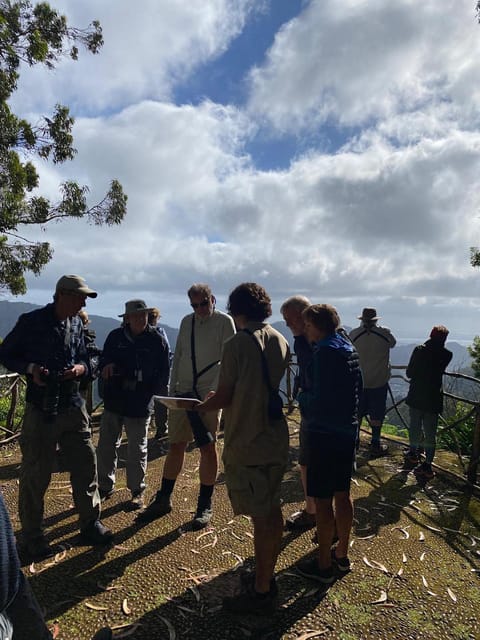
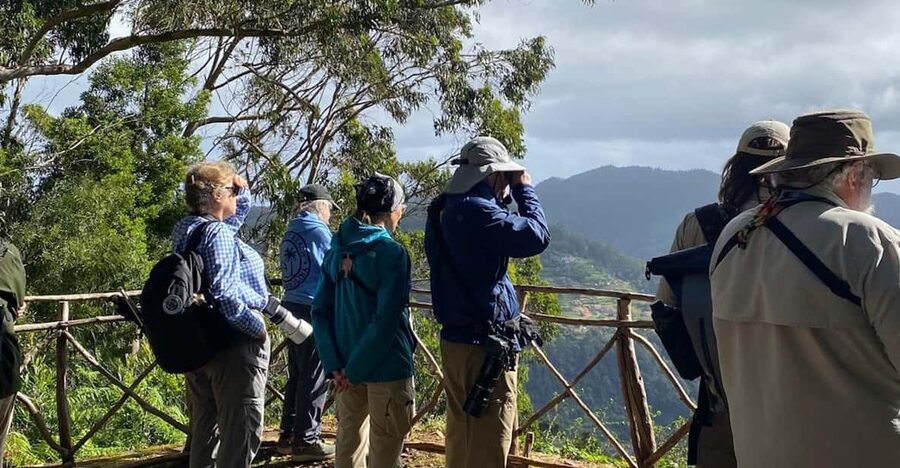
The tour isn’t about a single scenic stop. It’s about visiting several land sites—some where you’ll walk through, others where you’ll sit and watch. That structure makes sense if you want more than a quick look. Birds use different micro-habitats across the island, and within an IBA there can be several “best moments” depending on how the light and wind behave.
Here’s what you can count on:
- You’ll get multiple chances to observe rather than one extended wait.
- Your guide can shift tactics as conditions change: sit longer in promising spots, move when birds are quiet, and keep your scanning organized.
- You get included observation material so you can keep pace with the group’s sightings.
This matters because birdwatching is rarely linear. One moment you might be focused on small movement in foliage; the next you might be watching for a bigger silhouette crossing a gap. Having several sites helps you stay engaged even if a specific moment doesn’t deliver.

Your guide and the small-group setup (up to 8 people)
With a small group limited to 8, you get something practical: space to see and time to ask questions. Big groups can turn birdwatching into a shoulder-to-shoulder shuffle. In a smaller group, your guide can slow down, repeat an explanation, and help you connect the bird to the habitat rather than just the sighting.
In these outings, the guide is often listed as Alex/Alexandre, and multiple guests singled out how strong and natural the guidance feels. One person specifically said the guide knew a lot about birds and flora and even shared knowledge while driving between areas, which can make the transfer time part of the experience instead of dead time.
What you should do to get the most:
- Pay attention to how the guide describes habitat, not just the bird name.
- Don’t be shy about asking for a clearer ID explanation when you spot something uncertain.
- If you’re new to birdwatching, treat the tour like a field lesson. You’ll pick up the visual habits that make sightings easier later.
What’s included: observation material and guided time at each site
The tour includes observation material and guides you through several observation areas. You also get pickup and drop-off. That combination is the key to value here: you’re paying for structure, time with a guide, and help turning a few fleeting sightings into real learning.
Observation material sounds simple, but it changes what you can do. It gives you a better chance to keep up with the group when birds move quickly or when your first view is brief. If you already own binoculars or a camera setup, you can bring your own too, but it’s reassuring that the tour doesn’t assume you’ll arrive fully geared.
The other included piece is the guided time itself. You’re not just dropped at a viewpoint and pointed toward trees. You’re at land sites designed for bird observation, with the guide helping you notice what matters.
Price and value: is $64 per person fair for 4.5 hours?
At about $64 per person for 4.5 hours, the value depends on what you want from the experience.
If your goal is birdwatching in a focused way—endemics, IBAs, and multiple observation spots—this price lines up with the kind of guided field time you’re getting. A small group, a live guide in English or Portuguese, and included observation material all push it beyond a casual sightseeing walk.
If your goal is guaranteed species counts, you could feel disappointed. One negative note in the feedback pointed to fewer birds than expected and limited variation, with some people wanting more depth in explanations. That’s the reality of wildlife tours: you’re buying access to the right habitats and expertise, not a locked-in checklist.
My practical take: this is a strong value if you’re flexible, patient, and ready to work with the day you get. It’s less ideal if you only want action on demand and you assume every stop will produce multiple endemics.
What to bring and wear for comfortable, real-world birding
This tour is very much about being outside and moving around safely. You’ll want to show up ready to stand, walk short stretches, and handle uneven or dirty ground.
Bring:
- Comfortable shoes (closed-toe)
- Water
- Comfortable clothes that can get dirty
- Clothes suited for the conditions you’ll face in the field
Avoid:
- Alcohol and drugs (not allowed)
One small piece of advice: wear layers. Even in Madeira, weather can change what you can see, and layered clothing helps you stay comfortable without rushing to fix your gear mid-stop.
Where pickup and drop-off fit (Funchal and Caniço)
The tour starts with pickup in Funchal and returns you back there at the end. Pickup and drop-off are available within the Funchal and Caniço areas. If you’re staying outside those zones, you’ll need to contact the provider to arrange possible alternative pickup/drop-off locations.
This matters because it changes how painless your day feels. If you’re based in the main tourist areas, you can likely treat this as an easy half-day plan. If you’re staying farther out, don’t assume pickup is automatic—confirm ahead so your schedule stays intact.
Who should book this tour (and who might not love it)
This experience is best for:
- Birdwatchers who specifically want Madeira’s endemics
- People who enjoy habitat-based watching rather than just big “wow” sights
- Anyone who likes structured guidance and wants help with identification and behavior
It may not be ideal for:
- Very young children. It’s not suitable for children under 5.
- People who want a guaranteed number of birds or a rapid-fire viewing experience every minute.
- Anyone who expects a purely easy walk. Even when there are sit-and-watch moments, you still need comfortable shoes and realistic expectations.
If you go in with the right attitude—quiet, patient, and ready to learn—you’ll get more from the time you spend outdoors.
Should you book Madeira Birdwatching: The Endemics?
I’d book it if you want a guided, IBA-focused birdwatching half-day with a small group and a real shot at key endemics like Madeiran Firecrest, Laurel pigeon, and Madeiran Chaffinch. The included observation material plus a live guide in English or Portuguese makes it feel like a field course, not just a sightseeing add-on.
Skip it or think twice if you’re the type who needs certainty—because weather and bird movement control what you actually see. Also, if you’re the kind of traveler who needs nonstop explanation at every stop, ask yourself if you’ll be okay with periods of quiet waiting while the habitat does its thing.
If you’re flexible and curious, this is a solid way to spend 4.5 hours on Madeira: focused, practical, and built around the island’s birds in a way that helps you notice more than you would on your own.
FAQ
How long is the birdwatching tour?
It lasts 4.5 hours.
Where is the pickup location?
Pickup is from Funchal.
Is there pickup and drop-off outside Funchal and Caniço?
Pickup and drop-off are available within the Funchal and Caniço areas. If you’re staying outside those areas, you’ll need to contact the provider to see if an alternative location can be arranged.
How many people are in the group?
It’s a small group limited to 8 participants.
What languages is the live guide available in?
The tour has a live guide in English and Portuguese.
Do you include birdwatching or observation materials?
Yes, observation material is included for everyone.
Which endemic birds are the tour focused on?
The tour focuses on endemic Madeiran birds such as the Madeiran Firecrest, the Laurel pigeon, and the Madeiran Chaffinch. It also includes chances to see other endemic birds mentioned in past sightings.
What should I bring?
Bring comfortable shoes, water, comfortable clothes, clothes that can get dirty, and closed-toe shoes.
Are alcohol and drugs allowed?
No, alcohol and drugs are not allowed.
Is the tour suitable for children?
It is not suitable for children under 5 years.
More Tour Reviews in Madeira
- From Funchal: Ecological Catamaran Dolphin Whale Watching
★ 4.5 · 8,204 reviews - Madeira: Skywalk, Porto Moniz, Seixal, and Fanal 4WD Tour
★ 4.9 · 7,905 reviews - Funchal: Dolphin and Whale Watching Catamaran Cruise
★ 4.5 · 5,697 reviews - Funchal: Enchanted Terraces, Porto do Moniz & Fanal 4WD Tour
★ 4.8 · 4,930 reviews - From Funchal: Best of Madeira’s West Tour
★ 4.7 · 3,463 reviews