
Review · MADEIRA HIKING & NATURE WALKS
Ocean to Mountain Running Tour
Sea sounds at the start, forest shade soon after.
I love how this tour takes you on a real sea-to-mountain journey: you start down by the water, climb fast toward 900 m, then settle into easier trails with ocean views all the way to the finish. I also like that you’re not just running a route on paper; you’re doing it with a certified mountain running guide, which makes a big difference when you hit trail changes.
The main thing to consider is the difficulty curve. The first stretch is steep—those early kilometers climb from sea level to roughly 900 m—so this is not a casual jog.
After pickup from your Funchal accommodation (usually between 8:30 and 9:30), you warm up, then your guide—often seen leading groups like Dino—keeps the pacing sensible for a small group. One runner also described a guide named Dinarte helping the group handle a section affected by a landslip, including how to rejoin the route without fuss.
In This Review
- Why the Larano Trail to Laurissilva route is so compelling
- Ocean-to-mountain Madeira: what makes this route click
- The 6-hour rhythm: pickup, warm-up, then the steep start
- From sea to levada: the first taste of Madeira’s working water
- Laurissilva forest in Madeira: what you’re really running into
- The middle stretch: where the day starts to feel easier
- Finishing by the shore: ocean views with less effort
- Fitness reality check: 28 km and about 1,000 m gain
- Price and value: what $82 buys you in Madeira
- The guide matters: pacing, language, and staying on track
- What to bring (and what to skip) for this trail day
- Who this tour is for, and who should choose something else
- Should you book Ocean to Mountain Running Tour?
- FAQ
- How long is the Ocean to Mountain Running Tour?
- Where is this tour located?
- What is included in the price?
- Is food and drinks included?
- How far and how much elevation will I run?
- What time is pickup from Funchal?
- What languages are available for the guide?
- Is the tour suitable for wheelchair users?
- What should I bring, and what is not allowed?
Why the Larano Trail to Laurissilva route is so compelling
Sea-to-mountain in one run: tough early climb, then lighter running once you’re higher up.
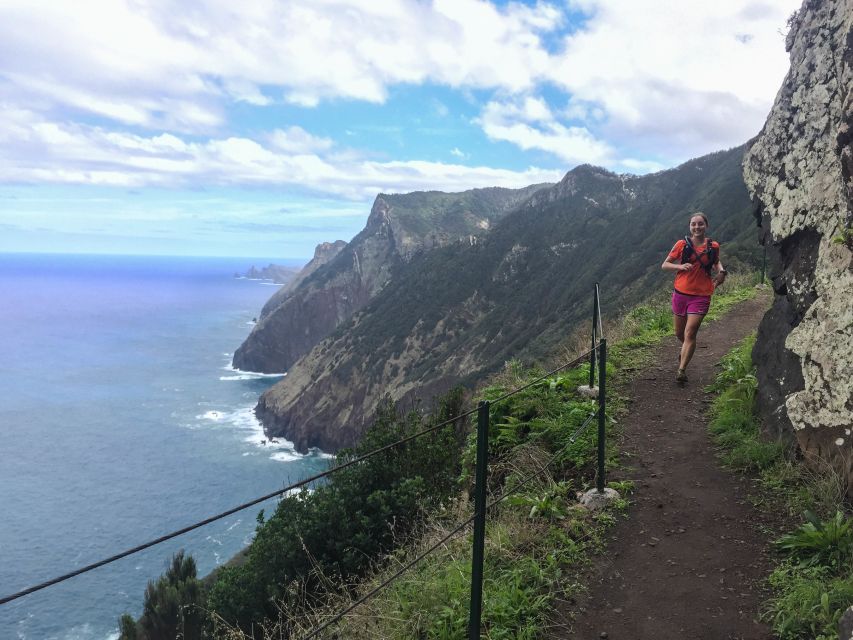
Larano Trail ocean views: you’re not stuck staring at dirt paths the whole time.
Levada running and coastal finishing: you’ll feel Madeira’s water channels and the coastline rhythm.
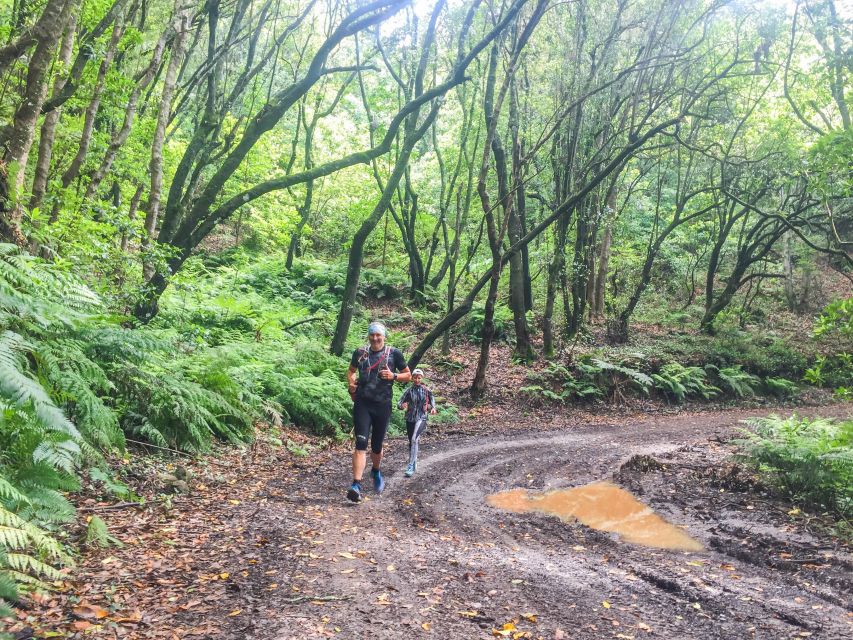
Inside Laurissilva forest: you spend time in Madeira’s native Laurissilva, in the eastern area.
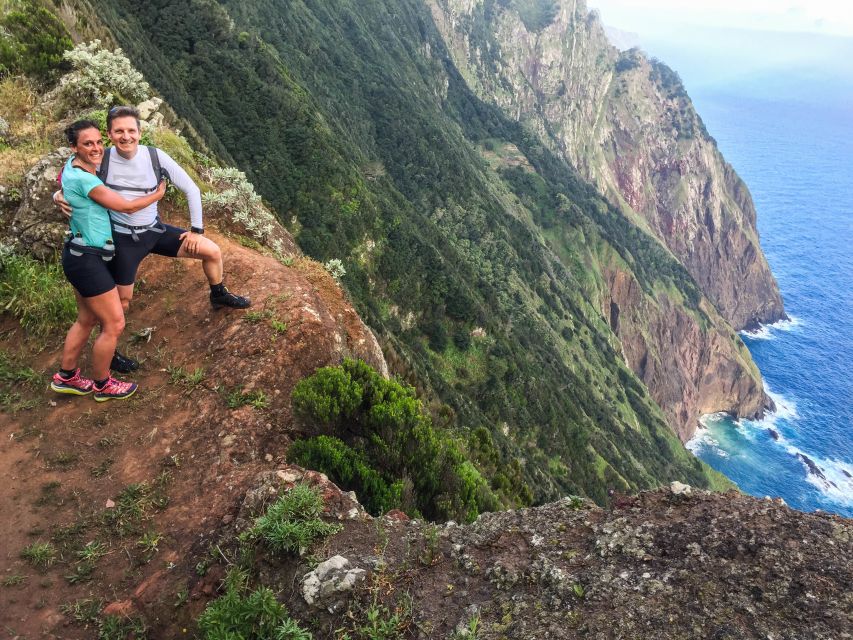
Small group up to 6: easier pacing, more attention, and fewer bottlenecks on the trail.
~28 km with ~1,000 m elevation: a satisfying distance for a 6-hour active day.
More trails, from Ribeiro Frio to the sea cliffs
- Madeira: Pico Arieiro to Pico Ruivo Hike★ 4.6 · 2,224 reviews
- Rabaçal: 25 Fontes & Risco Levada Hiking Transfer★ 4.8 · 1,670 reviews
- Pico Do Arieiro Pico Ruivo Sunrise or Morning Hike Transfers★ 4.8 · 1,169 reviews
- Caldeirão Verde: Levada Caldeirao Verde Hiking Transfer★ 4.9 · 1,071 reviews
Ocean-to-mountain Madeira: what makes this route click
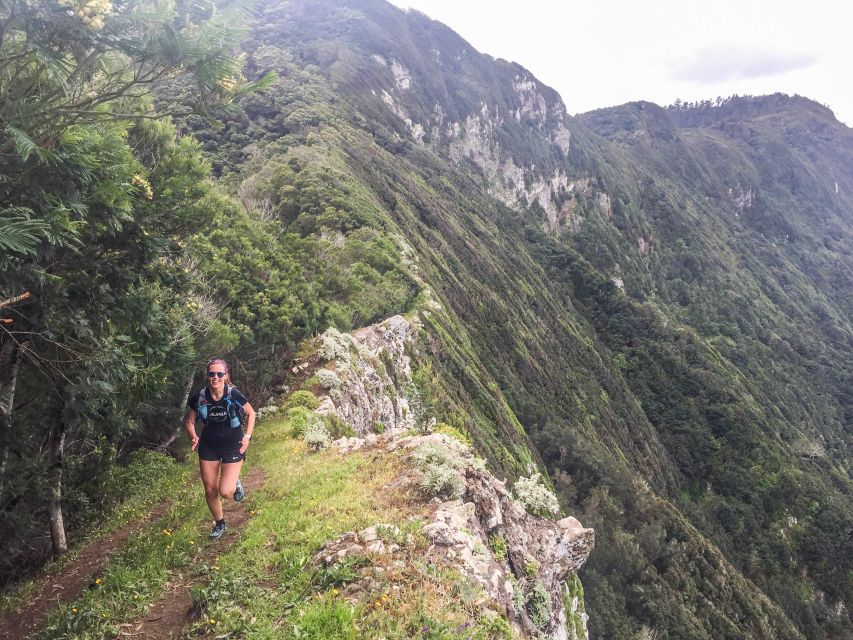
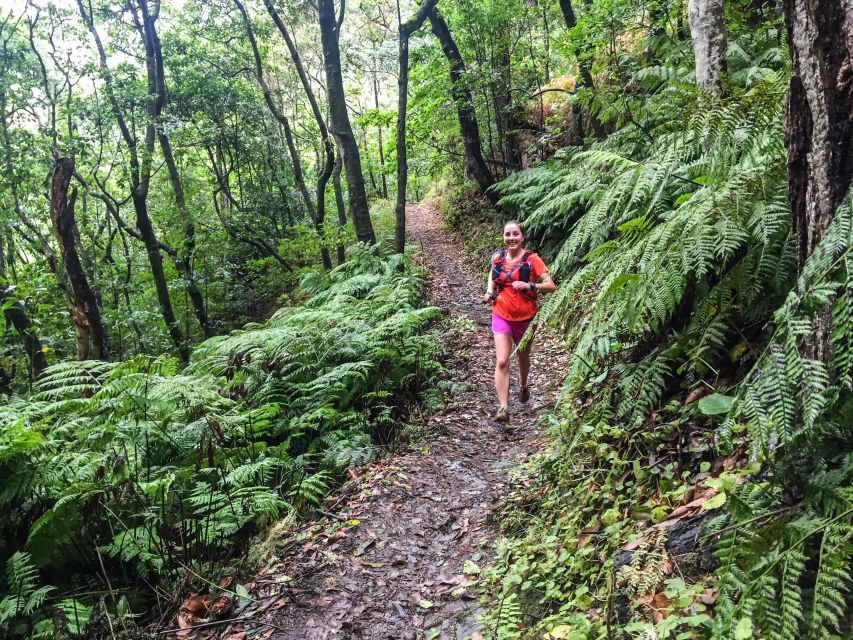
Madeira has a talent for doing a lot with a short distance. One moment you’re near sea level; the next you’re running where the air feels cooler and the landscape changes. This Ocean to Mountain Running Tour uses that same idea, and it does it in a way that feels natural for runners.
Instead of treating the day as one long slog, the route is built around transitions. You move from the coast and levada surroundings into the Laurissilva native forest, then you come back toward the shoreline for a smoother finish with ocean sound and views. That structure matters. It helps you pace mentally. When the climb starts, you know the rest is not all climbing.
And you’re not left to figure it out alone. With a guide, you get more than just someone holding the group together. You get someone managing route flow, keeping you on track, and helping with the small uncertainties that can pop up on mountain paths.
The 6-hour rhythm: pickup, warm-up, then the steep start
Your day begins with pickup from your Funchal accommodation between 8:30AM and 9:30AM. That gives you enough time to reach the starting area, meet your guide, and get organized before you start running.
You’ll start with a warm-up. Then the run begins with the part you’ll feel right away: the early climb. According to the tour description, the first 5 kilometers are the toughest, as you go from sea level up to around 900 meters. Another runner’s description adds a useful sense of how it can feel in practice: a steep ascent portion around the 7-kilometer range.
Here’s the practical takeaway for you: don’t treat the first kilometers like the middle of the run. If you burn energy early, you’ll pay for it later when the route steadies out. With a small group, the guide can often keep you from racing the hill too aggressively.
The tour is about 28 km total distance in around 6 hours, including the time for transitions and moving as a group. So the pacing plan isn’t just for comfort. It’s for finishing strong.
From sea to levada: the first taste of Madeira’s working water
One of the most interesting elements is that you’ll run on a levada—Madeira’s famous water channel system—and you’ll do it while moving from the sea toward the mountains. Even if you’ve never run near a levada before, the effect is usually obvious fast: you get a consistent sense of direction, and the route feels tied to how the island works.
Why I think this is valuable: it breaks up the usual trail-running experience. Many routes are either coast-only or forest-only. Here, you get a “water-and-rock” vibe early, then the day shifts into native forest.
You should also expect this segment to demand attention underfoot. Levadas and their adjacent paths can mean uneven ground and careful foot placement, especially if conditions are damp. The guide helps reduce stress here because you can focus on your stride instead of scanning constantly for what’s next.
Laurissilva forest in Madeira: what you’re really running into
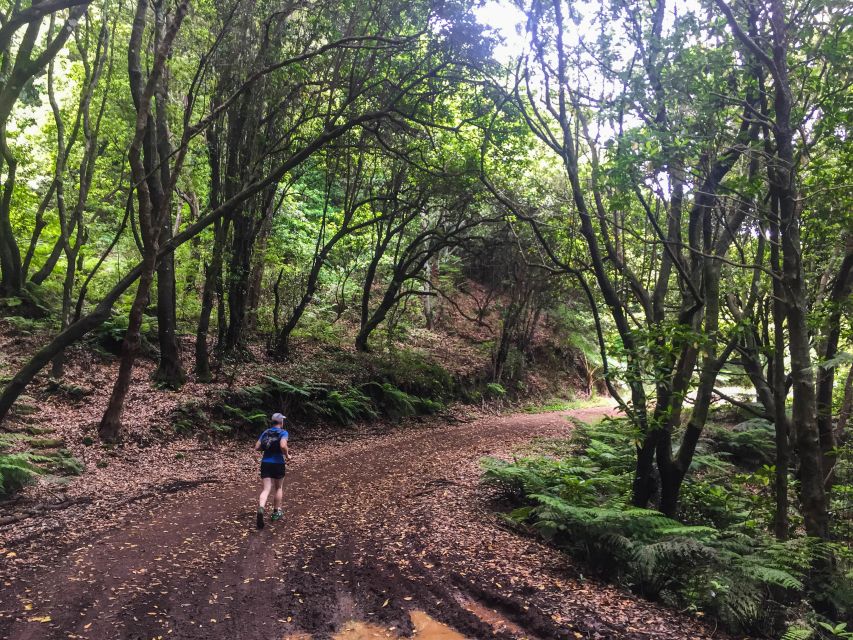
Later, you enter the eastern part of Madeira’s Laurissilva native forest. The name matters here because it’s not just any greenery. Laurissilva is a specific ecosystem, and when you run inside it, the feel of the run changes.
In practical terms, you’re trading open coastal exposure for more sheltered trail character. That usually means:
- less harsh sun on your skin
- cooler, calmer air
- a different kind of footing attention
You’ll likely find that the forest segment helps you settle into your rhythm. After the steep early climb, a shaded, steady trail is a great time to regain breathing control and settle into “run-sustain” mode.
It’s also where a guide earns their spot. On mountain routes, small issues can happen—paths can close, sections can redirect, or the obvious line on the ground can be less obvious when conditions change. One runner described a landslip affecting a portion of the route and praised the guide for showing how to rejoin correctly. That’s the kind of value you can’t easily DIY.
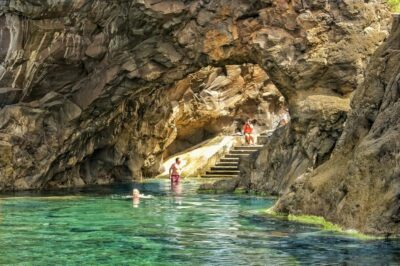
The middle stretch: where the day starts to feel easier
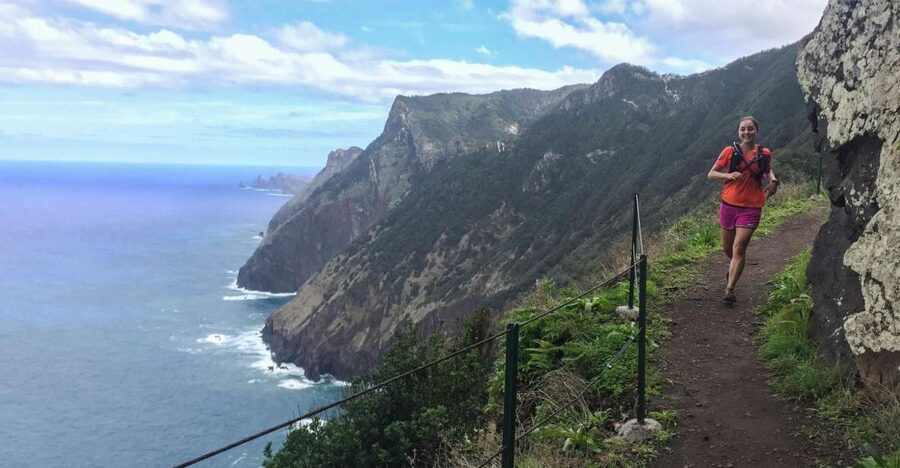
The tour description is clear: after that toughest early climb, the rest of the way consists of easy running trails so you can relax. For most runners, that’s when the trip becomes truly enjoyable.
This matters because trail running isn’t only about endurance. It’s also about managing fatigue. A day with big elevation followed by easier running usually hits a sweet spot: your legs work, but you’re not stuck grinding uphill the entire time.
In other words, the route design gives you two modes:
- a hard effort to reach elevation
- a more relaxed flow that lets you enjoy the scenery, not just survive it
If you like a run that feels like an adventure instead of a workout with no payoff, this is the part you’ll be grateful for.
Finishing by the shore: ocean views with less effort
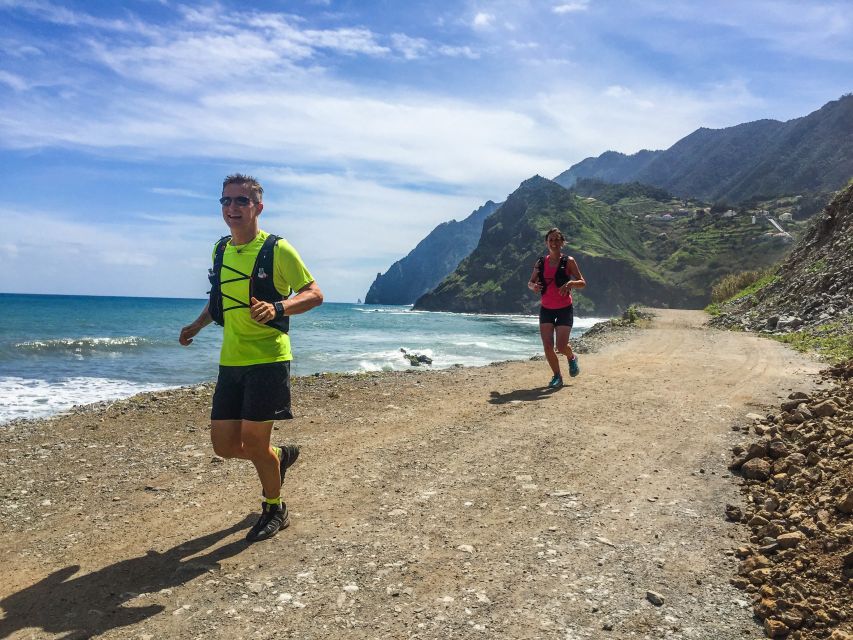
You end smoothly on a trail by the shore, and the description emphasizes that you’re surrounded with the sounds of the ocean and the views. That’s more than scenery. It’s a psychological trick.
When you reach the coastal finish, the running tends to feel less punishing. Even if you’re tired, the environment gives you a sense of completion. You can also push your attention outward rather than inward—looking at the water, listening to waves, and soaking in the final stretch without the struggle of constant elevation gain.
This is also where you’ll appreciate the guide’s job one more time. A coastal finish can be deceptively fun: you might feel you can sprint, but it’s still a trail day over 28 km. Sticking to the pacing plan keeps you from turning a satisfying finish into a sloppy one.
Fitness reality check: 28 km and about 1,000 m gain
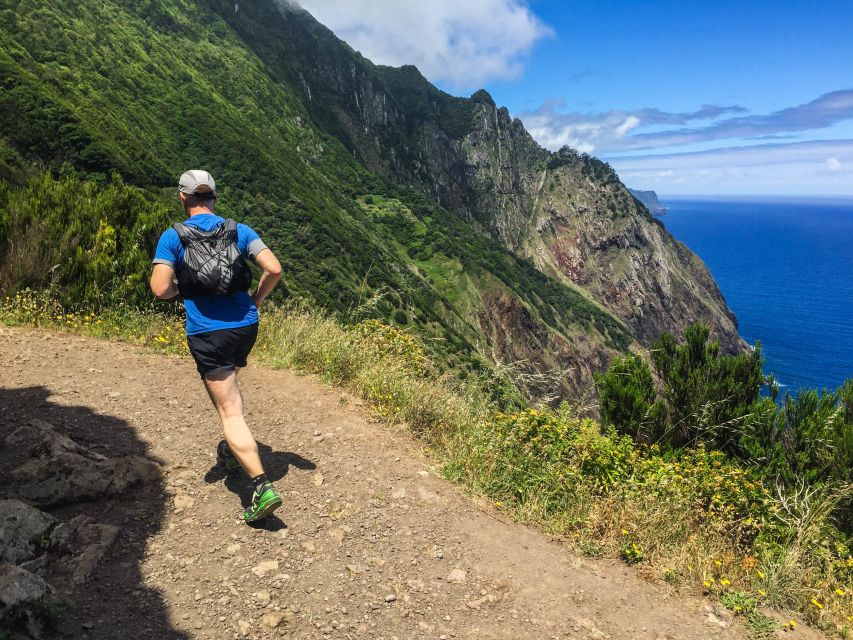
Let’s talk numbers honestly. You’re signing up for 28 kilometers and around 1,000 meters of elevation difference. That’s a solid amount for a single day.
The critical detail is how that elevation is distributed. The tour description says:
- first 5 km are the toughest climb up to about 900 m
- after that, you transition into easier trails
That profile is manageable for many fit runners because you’re not climbing the same steep grade for the entire day. But it still requires preparation. If your training is mostly flat road running, you should be ready for a sharp hill effort early and the need to maintain balance on trail.
In general, this tour suits you best if:
- you can run 28 km (or close) at least on a good day
- you’re comfortable with a steep climb as part of the plan
- you enjoy trail running more than running fast
It’s not a good match if you need low-impact running only, or if steep climbs immediately shut you down.
Price and value: what $82 buys you in Madeira
At $82 per person for a 6-hour guided run, you’re paying for more than “someone to point at a trail.”
This price includes:
- hotel pickup and drop off in Funchal
- a certified mountain running guide
- snack bars and a water bottle
- liability and personal accidents insurance
What’s not included is food and drinks, so plan to have what you need after the run (water, a snack, or a proper meal).
Here’s how I’d think about value: independent trail running in Madeira can cost time. Even if you can navigate, transportation from Funchal, route confidence, and safety decisions can easily turn into stress. This tour bundles the setup and keeps the run focused on doing the thing—running.
Also, the small group size matters. Limited to 6 participants, you’re less likely to get stretched out or stuck behind slower pacing in narrow trail sections. That often improves the overall experience, even if you never think about it in advance.
The guide matters: pacing, language, and staying on track
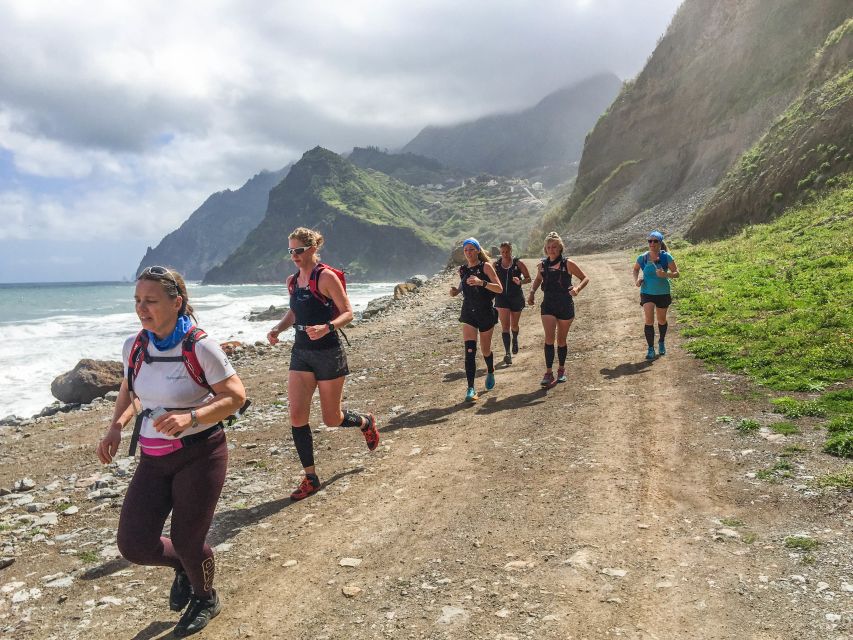
You’ll be with a guide throughout, and the tour offers English, Spanish, and Portuguese. That’s a big practical advantage if your group has mixed language comfort levels.
Guides also manage something you can’t see on a brochure: route changes. One runner specifically mentioned a section closed due to a landslip and credited the guide for making it easy to rejoin the trail. Even when routes are signposted, that kind of local knowledge saves time and reduces uncertainty.
From a runner’s standpoint, the best guides do two things at once:
- keep you moving safely as a group
- help you pace the hard part so you can enjoy the easier miles
If you’ve ever started strong on a climb and then wondered why the rest felt harder than it should, you’ll appreciate the value of someone actively guiding pacing.
What to bring (and what to skip) for this trail day
The tour is very straightforward about gear, and following it will make your run smoother.
Bring:
- comfortable shoes suitable for trail running
- sunscreen
- a jacket
- a daypack
Not allowed:
- pets
- open-toed shoes
That jacket item is important. Coastal starts can feel cooler than you expect, and mountain trails can shift with wind and shade, especially when you move into forest. You want something light enough to carry but useful enough to keep you comfortable.
Who this tour is for, and who should choose something else
This experience is best for you if:
- you want a guided Madeira trail running day with real scenery changes
- you like routes that mix hard effort with easier running afterward
- you enjoy ocean views and also want time in Laurissilva forest
- you’d rather spend mental energy running than navigating
You should skip it if:
- you use a wheelchair (the tour isn’t suitable)
- you’re not prepared for a steep early climb from sea level toward 900 m
- you prefer a fully low-effort outing with no elevation challenge
Should you book Ocean to Mountain Running Tour?
If you’re the type who likes the feeling of getting somewhere under your own power, this is a strong choice. The route’s structure does a lot for you: a steep start, a gentler middle, and a coastal finish with ocean views and sounds. The small group size and guided leadership make it easier to stay relaxed and focused.
I’d book it if you can handle trail footing and you’re okay with the first tough kilometers. If hills wreck your rhythm, you’ll still get a great environment, but the day may feel too demanding for your comfort level.
FAQ
How long is the Ocean to Mountain Running Tour?
It lasts about 6 hours.
Where is this tour located?
It runs in Madeira, Portugal.
What is included in the price?
Hotel pickup and drop off, a certified mountain running guide, snack bars, a water bottle, and liability and personal accidents insurance.
Is food and drinks included?
No. Food and drinks are not included.
How far and how much elevation will I run?
The total distance is about 28 kilometers, with an approximate 1,000 meter elevation difference.
What time is pickup from Funchal?
Pickup is included, and you’ll be collected between 8:30AM and 9:30AM.
What languages are available for the guide?
The guide is available in English, Spanish, and Portuguese.
Is the tour suitable for wheelchair users?
No, it is not suitable for wheelchair users.
What should I bring, and what is not allowed?
Bring comfortable shoes, sunscreen, a jacket, and a daypack. Pets and open-toed shoes are not allowed.
More Tour Reviews in Madeira
- From Funchal: Ecological Catamaran Dolphin Whale Watching
★ 4.5 · 8,204 reviews - Madeira: Skywalk, Porto Moniz, Seixal, and Fanal 4WD Tour
★ 4.9 · 7,905 reviews - Funchal: Dolphin and Whale Watching Catamaran Cruise
★ 4.5 · 5,697 reviews - Funchal: Enchanted Terraces, Porto do Moniz & Fanal 4WD Tour
★ 4.8 · 4,930 reviews - From Funchal: Best of Madeira’s West Tour
★ 4.7 · 3,463 reviews
More Madeira Walks on Foot
- Madeira: Pico Arieiro to Pico Ruivo Hike
★ 4.6 · 2,224 reviews - Rabaçal: 25 Fontes & Risco Levada Hiking Transfer
★ 4.8 · 1,670 reviews - Pico Do Arieiro Pico Ruivo Sunrise or Morning Hike Transfers
★ 4.8 · 1,169 reviews - Caldeirão Verde: Levada Caldeirao Verde Hiking Transfer
★ 4.9 · 1,071 reviews - Madeira: Sunrise at Pico do Arieiro & Hike Larano trail
★ 4.8 · 951 reviews
Just In: New Madeira Reviews

Madeira Hiking & Nature Walks, compared.
 ★ 4.8Pico do Arieiro Sunrise Hiking TransferFrom $384,021 reviews
 ★ 4.6Pico Arieiro to Pico Ruivo HikeFrom $542,224 reviews
 ★ 4.9Pico do Arieiro & Pico Ruivo Hiking TransferFrom $371,845 reviews
 ★ 4.8Rabaçal: 25 Fontes & Risco Levada Hiking TransferFrom $401,670 reviews
 ★ 4.8Pico Do Arieiro Pico Ruivo Sunrise or Morning Hike TransfersFrom $371,169 reviews
 ★ 4.9Caldeirão Verde: Levada Caldeirao Verde Hiking TransferFrom $391,071 reviews
 ★ 4.8Sunrise at Pico do Arieiro & Hike Larano trailFrom $53951 reviews
 ★ 4.9Caniçal Ponta São Lourenco Hiking TransferFrom $35756 reviews
Browse the lists this tour appears in