
Review · WEST MADEIRA TOURS
Ribeira Brava: The barn of the first atlantic city – Private Tour
Madeira’s past is written in the streets. This private tour uses geology and Ribeira Brava’s historic center as the classroom, turning everyday buildings and ground textures into a story that starts with Earth’s formation and ends with how people built, farmed, and survived here. I especially love how the guide connects the island’s science—like alluvial deposits and lava flows—to what you can actually see on the ground. I also like the practical cultural thread, including Portuguese engineering and sugar cane-era economics.
One thing to consider: this experience depends on good weather, and you’ll spend most of the time outside in and around the historical center.
In This Review
- Key things that make this tour worth your Saturday morning
- Ribeira Brava’s “barn” idea: why this tour feels different
- What you cover: Earth formation to Madeira’s settlement (without the fluff)
- Stop 1, but with several mini-stops: geology you can actually spot
- The ground speaks: alluvial deposits and lava flows
- The “why” behind town planning
- A clear synthesis of Portuguese settlement
- Flash floods: learning the risk so the town feels less mysterious
- Captain Luis Gonçalves Silva: engineering details you can notice
- Heritage stones, cane mills, and pavement: the everyday stuff that tells the real story
- Portuguese Global Heritage Stones
- Sugar cane mills and the island’s money trail
- Portuguese-pavement and Madeiran-pavement styles
- Guides who make the difference: Sandro and Santosh’s role in the experience
- Price and logistics: how $40.33 buys a lot of street-level learning
- Meeting point and route shape
- When it runs
- What to bring (and what you can relax about)
- Who this tour is best for (and who might want a different style)
- Should you book this private Ribeira Brava geology-and-history tour?
- FAQ
- How long is the Ribeira Brava: The Barn of the First Atlantic City tour?
- When does it run and where does it start?
- Is this tour private or shared?
- What’s included in the price?
- Is transportation included?
- What happens if the weather is poor or I need to cancel?
Key things that make this tour worth your Saturday morning
- One area, many lessons: Ribeira Brava’s historic center works like an open-air museum, without hopping around Madeira.
- Flash floods explained with real context: you’ll connect that dramatic natural risk to the way the valley and town sit today.
- Hands-on Earth science, not textbook talk: you’ll look for quaternary alluvial deposits and subaerial lava flows in situ.
- Portuguese settlement in visible details: you’ll connect early planning choices to what the terrain allowed.
- Architecture you can measure with your eyes: the manor house of Captain Luis Gonçalves Silva gets an engineering-focused spotlight.
- Madeira’s economy told through cane mills and pavement: sugar cane and local stonework show how daily life shaped the town.
The city sights gathered into one easy loop
- Funchal: Hop-On Hop-Off Bus Tour★ 4.3 · 813 reviews
- Madeira: Private Funchal City Tour in a Tukxi★ 4.7 · 684 reviews
- Madeira: West and East Madeira Top Highlights Tour★ 4.8 · 155 reviews
- Funchal: Christmas Lights Sightseeing Night Tour★ 4.8 · 145 reviews
Ribeira Brava’s “barn” idea: why this tour feels different

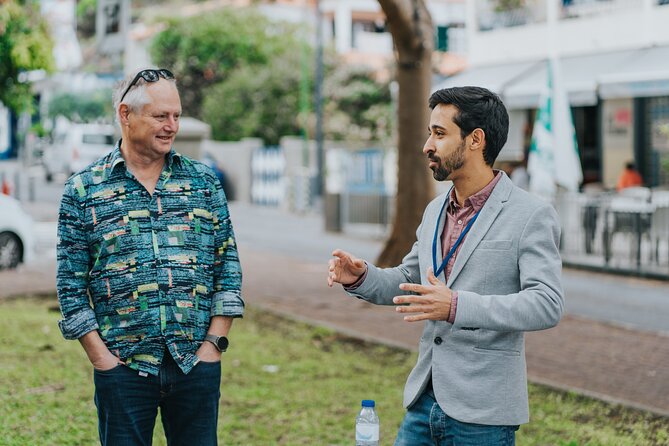
If you’re the kind of person who likes your destinations with a clear point of view, this one works. The theme is built around a simple concept: Ribeira Brava’s valley and historic buildings can teach you how Madeira formed, how Portuguese settlers adapted, and how the community evolved. Instead of treating the town like a backdrop, the walk treats it like evidence.
That’s why the pacing feels smart. You’re not just seeing a list of sites—you’re learning how to read the place. One moment you’re focused on how water moved through the landscape; the next you’re noticing how materials and layouts reflect that reality. In a short 2.5 hours, it gives your brain a map.
What you cover: Earth formation to Madeira’s settlement (without the fluff)
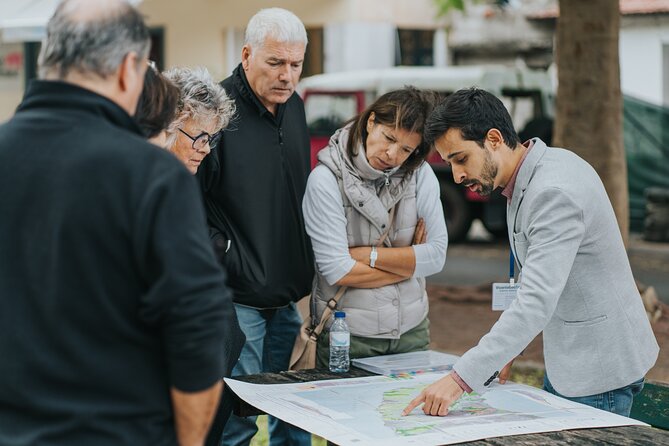
The tour starts broad—planet Earth’s formation and the larger story that led to islands like Madeira. Then it zooms in. You’ll spend time on the Madeira archipelago’s characteristics and the particular geological features that make this island what it is.
From there, the guide shifts to the part that makes Ribeira Brava feel urgent and real: flash floods. Madeira has a reputation for dramatic weather and steep terrain, and these floods are tied to why valleys, rivers, and built spaces need careful understanding. You’ll look at how those events shaped the setting you see today.
This is also where the tour’s title makes more sense. The “barn” concept is essentially metaphorical—an old-style place for learning and storing knowledge, applied to a modern walk where the street itself becomes the lesson.
Stop 1, but with several mini-stops: geology you can actually spot
Even though the outing is organized around Ribeira Brava, it’s filled with specific look-and-explain moments. Expect the guide to point out features you might otherwise walk past without noticing.
Here’s what that looks like in practice:
The ground speaks: alluvial deposits and lava flows
You’ll observe quaternary alluvial deposits and subaerial lava flows directly in the setting. The key value here is interpretation. Knowing that these features exist is one thing; understanding why they matter for settlement and water movement is what makes the stop memorable.
West to Porto Moniz, Fanal and Seixal, more days out
The “why” behind town planning
Another core segment is how Ribeira Brava is laid out in space. The tour treats the village layout as a response to geology and risk, not as random street arrangement. You’ll get a clearer sense of why certain areas made sense for building and movement, and why valleys and slopes can be both productive and dangerous.
A clear synthesis of Portuguese settlement
After the science and the landscape reading, the guide pulls the story together. You’ll walk away with a better sense of how Portuguese settlement developed on Madeira—what the island offered, what it demanded, and how people turned natural constraints into an everyday system.
Flash floods: learning the risk so the town feels less mysterious
This part is not just scary storytelling. It’s explanation. When you learn how flash floods behave—how quickly water can surge and what steep valleys do—you start understanding why Madeira’s urban forms and infrastructure aren’t accidental.
The tour uses those flash flood details to connect back to what you’re standing on: the way the valley holds and channels water, and what that means for where people settled and how they built. The practical result is simple: you see Ribeira Brava with more respect. Not fear-mongering, just real awareness.
If you’re visiting Madeira for the first time, this is also one of the best ways to get your bearings fast. Many people concentrate only on viewpoints. This tour adds the missing layer: the forces underneath the views.
Captain Luis Gonçalves Silva: engineering details you can notice
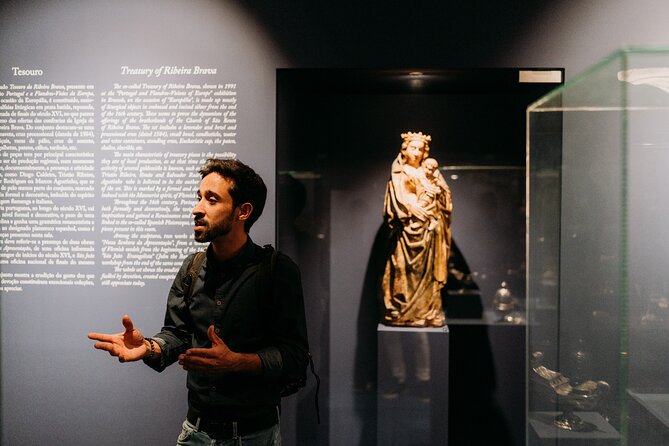
One of the most interesting stops is the manor house connected to Captain Luis Gonçalves Silva. The focus isn’t just who he was. It’s the engineering aspect of the property—how the building relates to its setting and what design choices likely had to account for the local conditions.
This is where I think the tour scores well for value. A lot of “architecture” tours stop at surfaces. Here, you’re prompted to see structure as adaptation. Even if you’re not a design nerd, the explanation helps you interpret what you’re looking at.
Heritage stones, cane mills, and pavement: the everyday stuff that tells the real story
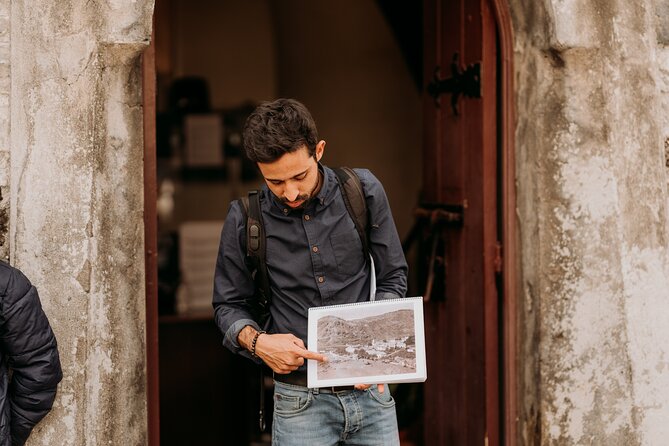
The tour also includes three categories of details that make the whole experience feel grounded instead of abstract:
Portuguese Global Heritage Stones
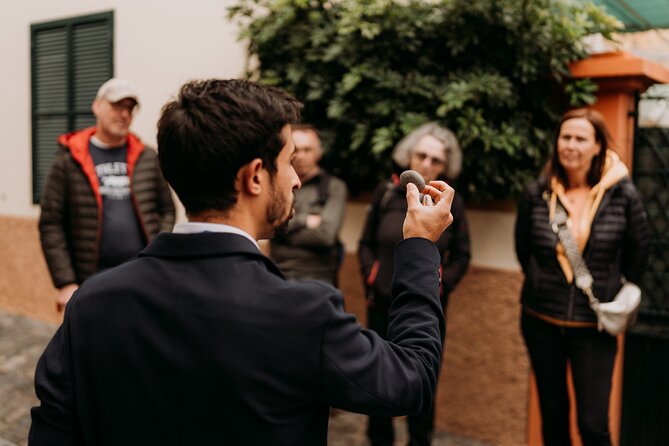
You’ll observe a Portuguese Global Heritage Stone. It’s a quick stop, but it matters because it reinforces the geology theme in a tangible way. Instead of floating above the subject, the tour points you back to materials—stone types, how they’re used, and why the island’s resources influenced building choices.
Sugar cane mills and the island’s money trail
Then comes one of the most “Madeira” topics: sugar cane. You’ll observe sugar cane mills and learn how cane production relates to the island’s socio-economic evolution. This isn’t only about farming history. It’s about how an economy shapes a town—work patterns, infrastructure needs, and the way wealth and labor left physical traces.
If you’re the type who enjoys understanding why a place looks the way it does, this segment connects nicely to what you’ve already learned about the terrain and settlement.
Portuguese-pavement and Madeiran-pavement styles
Finally, you’ll observe Portuguese-pavement style and Madeiran-pavement style used in the area. Pavement sounds minor until you connect it to water, slopes, and local materials. The tour helps you see paving as functional design, not just decoration.
Guides who make the difference: Sandro and Santosh’s role in the experience
The success of a geology-and-history walk lives and dies on the guide’s ability to explain clearly. In this case, the experience has a strong track record for strong communication and patience.
Two guide names show up repeatedly in the feedback you can learn from in advance: Sandro and Santosh. Both are praised for in-depth explanations of Madeira and Ribeira Brava, and for adding useful vacation advice like where to eat and where to stay. Even when the tour is technical—flood behavior, deposits, engineering—this kind of guiding helps it land in normal human terms.
So if you care about a guide who can answer your questions on the spot, this tour has that reputation baked in.
Price and logistics: how $40.33 buys a lot of street-level learning
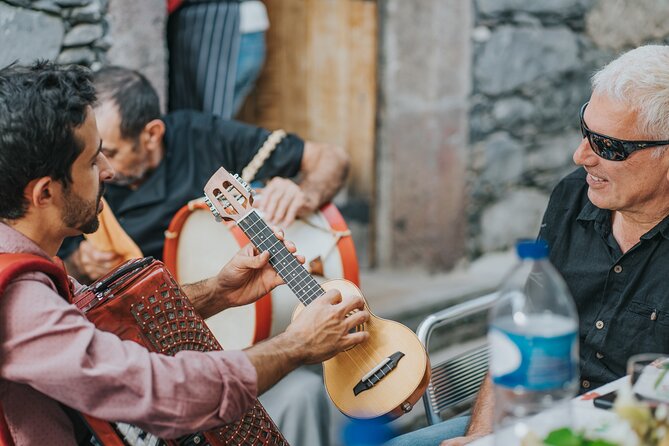
At $40.33 per person for about 2 hours 30 minutes, this is priced like a value morning—especially because it’s private. Your group participates, not a mixed crowd. That matters if you want questions answered or if you’d rather move at your own pace.
Also, admission is listed as free, and the package includes:
- Local guide
- Bottled water
- Coffee and/or tea
- Alcoholic beverages
That’s not just a comfort perk. It’s a sign the tour is designed to keep you refreshed during an active walk.
The only big logistics gap: private transportation isn’t included. So you’ll want to plan how you’ll get to the meeting point yourself.
Meeting point and route shape
You start at the Fort of São Bento, at R. Gago Coutinho e Sacadura Cabral, 9350-216 Ribeira Brava, and you end back at the same place. That round-trip format makes the plan easier—no mystery ending location.
When it runs
The listed opening window runs from 01/01/2023 to 06/06/2026, and the specific time shown is Saturdays 10:00 AM–12:30 PM.
What to bring (and what you can relax about)
You don’t need special gear, but I’d plan like this is an outdoor walk through a historic center.
Bring:
- Comfortable walking shoes (pavement and uneven streets are common in old towns)
- A light layer, since Madeira weather can change fast
- Whatever you need for personal hydration, even though bottled water is included
You can relax about:
- Mobile ticket (it’s part of the setup)
- Having a guide who keeps the pace moving with clear explanations
- Basic refreshments—coffee/tea and alcoholic beverages are included
Who this tour is best for (and who might want a different style)
This tour is a great match if you want:
- Geology that connects to daily life
- History and Portuguese settlement told through place-specific details
- A guided walk where you notice more than you thought you would
It may be less ideal if you prefer:
- A long sightseeing day with multiple neighborhoods and lots of driving
- Only viewpoints and photos, with minimal explanation
Because it’s organized around Ribeira Brava’s historical center, it’s concentrated. That’s a positive for many people. If you want maximum variety in one day, you may want to pair it with a separate scenic Madeira activity.
Should you book this private Ribeira Brava geology-and-history tour?
If you like your Madeira with a strong “why” attached, yes. This is one of the better ways to understand how the island works: Earth science, natural risk, Portuguese settlement, architecture, and the economy—linked together in one short walk.
Book it especially if:
- You’re visiting on a Saturday morning
- You want a private experience with room for questions
- You enjoy seeing how pavement, stones, and buildings connect to water, slopes, and survival
Skip it if:
- You hate outdoor walks or you’re unlikely to handle uneven historic streets
- You need a tour that includes transportation, since private transport isn’t included
- Weather is unstable when you plan to go, since the tour requires good weather
FAQ
How long is the Ribeira Brava: The Barn of the First Atlantic City tour?
It’s listed at about 2 hours 30 minutes.
When does it run and where does it start?
It starts at Fort of São Bento in Ribeira Brava and is shown for Saturdays from 10:00 AM to 12:30 PM (within the published opening window).
Is this tour private or shared?
It’s private. Only your group participates.
What’s included in the price?
The package includes a local guide, bottled water, coffee and/or tea, and alcoholic beverages. The admission ticket is listed as free.
Is transportation included?
No. Private transportation is not included, so you’ll need to plan how you get to the meeting point.
What happens if the weather is poor or I need to cancel?
The experience requires good weather. If it’s canceled due to poor weather, you’ll be offered a different date or a full refund. Free cancellation is available up to 24 hours in advance for a full refund.
The Island, Just for Your Group
- Madeira: Private Funchal City Tour in a Tukxi
★ 4.7 · 684 reviews - Madeira Private 4-Seater Mercedes VIP
★ 4.9 · 308 reviews - Madeira “Mystery Tour” – Full Day Private 4×4 Jeep
★ 5.0 · 199 reviews - Adventure Trikes Private Tour in Madeira
★ 5.0 · 185 reviews - Madeira: Private Cristiano Ronaldo Tour with CR7 Museum
★ 4.9 · 176 reviews
The West Coast: Porto Moniz and Fanal
- Madeira: Skywalk, Porto Moniz, Seixal, and Fanal 4WD Tour
★ 4.9 · 7,905 reviews - Funchal: Enchanted Terraces, Porto do Moniz & Fanal 4WD Tour
★ 4.8 · 4,930 reviews - From Funchal: Best of Madeira’s West Tour
★ 4.7 · 3,463 reviews - From Funchal: West Madeira Waterfalls and Fanal Forest Tour
★ 4.7 · 2,630 reviews - From Funchal: West Madeira and Laurel Forest Day Trip
★ 4.7 · 2,067 reviews
Funchal at a Glance: More Sightseeing
- Funchal: Hop-On Hop-Off Bus Tour
★ 4.3 · 813 reviews - Madeira: Private Funchal City Tour in a Tukxi
★ 4.7 · 684 reviews - Madeira: West and East Madeira Top Highlights Tour
★ 4.8 · 155 reviews - Funchal: Christmas Lights Sightseeing Night Tour
★ 4.8 · 145 reviews - Funchal: City Highlights Tuk-Tuk Tour
★ 4.9 · 131 reviews
Just In: New Madeira Reviews

West Madeira Tours, compared.
 ★ 4.9Skywalk, Porto Moniz, Seixal, and Fanal 4WD TourFrom $737,905 reviews
 ★ 4.8Enchanted Terraces, Porto do Moniz & Fanal 4WD TourFrom $744,930 reviews
 ★ 5.0Porto Moniz, Seixal, Fanal Forest, Cliff Skywalk in Open Roof 4X4From $753,631 reviews
 ★ 4.7Best of Madeira’s West TourFrom $423,463 reviews
 ★ 4.7West Madeira Waterfalls and Fanal Forest TourFrom $332,630 reviews
 ★ 4.7West Madeira and Laurel Forest Day TripFrom $372,067 reviews
 ★ 4.8Western Madeira Guided Trip & Fanal Mystic ForestFrom $351,653 reviews
 ★ 4.9West Tour With Guide Fanal Forest SykWalkExperienceFrom $371,602 reviews
Browse the lists this tour appears in