Review · MADEIRA
Funchal: famous places and magical corners.
Funchal’s 600-year story starts right underfoot. This walking tour strings together Fort São Tiago and Sé Cathedral do Funchal with street-level details like Rua de Santa Maria’s painted doors and the daily rhythm of the market. I especially love the way your guide connects landmarks to Madeira’s past, and I like that the stops are practical and spread across the city center. One thing to plan for: you’ll do some uphill walking and there are stairs around Quinta das Cruzes, and it’s not the best fit for everyone with mobility limits.
The morning feel is relaxed. You start at Jardim do Almirante Reis, beside the steamship Mosquito, then work your way through viewpoints, churches, gardens, and side streets. The private group format helps too, since you can move at a comfortable pace without feeling rushed.
At $50 per person for about 2.5 hours (with starting times at 10 am and 11 am from Monday to Saturday), this tour is a solid way to get your bearings fast in Funchal. You also get the big bonus that the places you visit are free of charge, so you’re paying mainly for the guide and the route—not for entry tickets.
In This Review
- Key things that make this Funchal walk worth it
- Starting at the Mosquito: get oriented fast in Funchal
- Fort São Tiago: defense history with real sea views
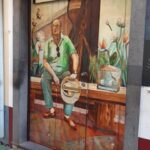
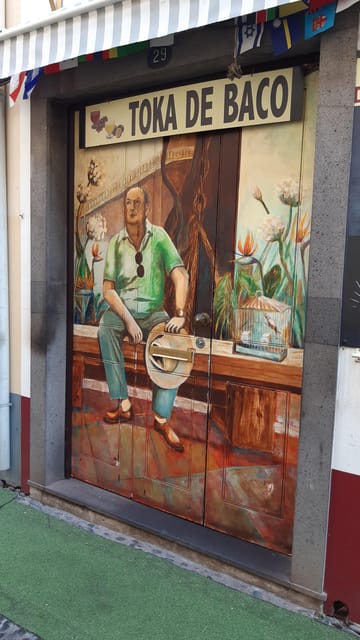
- Rua de Santa Maria: painted doors and street-level art
- Lavradores Market: aromas, local foods, and daily life
- The quiet stops: secret corners and small surprises
- Quinta das Cruzes and the climb back to Madeira’s past
- São Pedro Church, Municipal Garden, and the path toward Sé
- Pace, footwear, and what to bring for a comfy walk
- Price and value: how $50 stacks up in Funchal
- Who should book this tour, and who might want a different plan
- Should you book this walking tour in Funchal
- FAQ
- How long is the Funchal walking tour?
- What time does the tour start?
- Where do I meet the guide?
- Is there an entrance fee for the sights?
- What should I bring?
- Is this tour wheelchair accessible or suitable for young children?
Key things that make this Funchal walk worth it
- Local guides who actually live in Funchal: English or Spanish with years of passion for history and hidden corners.
- Free stops, no ticket math: the sights on the route are free, so you can focus on seeing.
- Fort São Tiago views first: sea-facing fort energy plus skyline views to set the tone.
- Rua de Santa Maria painted doors: street art details you’ll notice once someone points them out.
- Quinta das Cruzes garden climb: worth it, but plan for the uphill and stairs.
- Sé Cathedral as the grand finish: Gothic grandeur to cap the walk.
Still deciding? Set this one beside a few island favourites first.
- Funchal: Pico do Arieiro Sunrise Hiking Transfer★ 4.8 · 4,021 reviews
- Porto Moniz, Seixal, Fanal Forest, Cliff Skywalk in Open Roof 4X4★ 5.0 · 3,631 reviews
- Madeira Funchal:East Tour Pico Arieiro & Santana&Laurissilva★ 4.9 · 1,994 reviews
- Madeira Dolphin and Whale Watching on a Ecological Catamaran★ 4.5 · 1,957 reviews
Starting at the Mosquito: get oriented fast in Funchal
Your tour kicks off at Jardim do Almirante Reis, right next to the steamboat called Mosquito, displayed along the waterfront area. It’s a smart starting point. You get the coastal context immediately, and it helps you understand how Funchal grew as a port city long before today’s cruise ships and promenades took over.
You’ll be with one of the two guides: Carlos or Rosario. You can spot them by the Portuguese flag (green and red with a yellow shield) they’ll be holding. Both guides guide in English and Spanish, and they live in Funchal—so you’re getting a local brain, not a script read off a screen.
From there, the walk moves into the older city streets. Expect a steady mix of major landmarks and smaller streets where the details matter. This is the type of tour that makes you look at doors, gates, and façades like they’re part of the story, because they are.
Fort São Tiago: defense history with real sea views
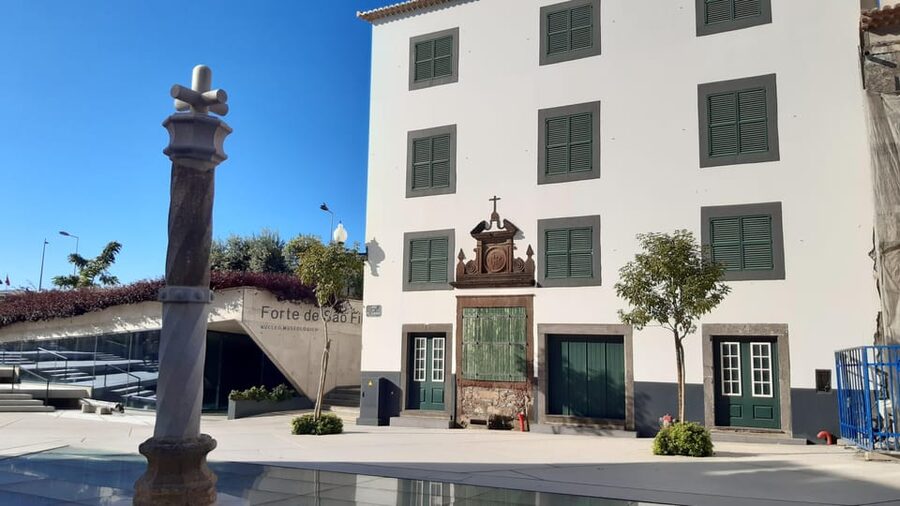
Fort São Tiago is one of those places where the building and the landscape make sense together. This fortress overlooks the sea, so you can picture why it was useful: ships coming in, lines of sight, and the practical need to defend a port.
The guide’s job here is to help you connect what you see with what it meant. Even if you’re not into military history, it clicks quickly once you’re looking outward. You’ll learn how Funchal’s maritime role shaped local life and why coastal power mattered.
The sea-facing outlook is also great for photos and a quick reset in the middle of the city streets. If you’re heat-sensitive, this stop can be a breather since you can pause, look, and take in the view before continuing.
Rua de Santa Maria: painted doors and street-level art
After the fort, you shift to Rua Santa Maria, where Funchal shows its artistic side in a way that’s easy to miss if you’re sightseeing alone. One of the tour’s best tricks is teaching you where to look: the doors.
This street is known for colorful, artistic painted doors. They’re small, but that’s exactly the point. These details are how local neighborhoods “feel” old without you needing a museum ticket. It’s also the kind of place where a guide can spot patterns—styles, themes, and the way the street developed.
If you like photography, this is where you’ll slow down naturally. If you prefer a lighter pace, you’ll still enjoy it because it’s not a long slog—it’s short, interesting, and visually rewarding.
Lavradores Market: aromas, local foods, and daily life
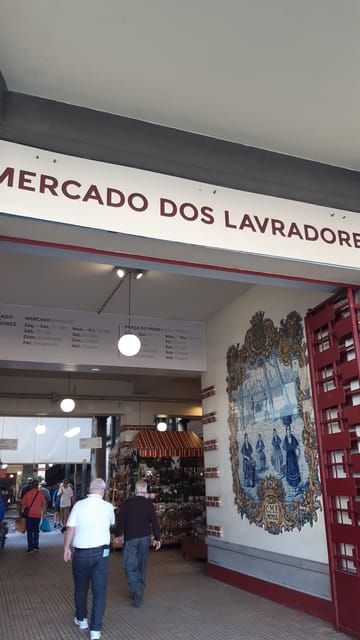
Next comes the Farmers’ Market, Funchal’s famous Lavradores Market area (the place with food, color, and that unmistakable market-energy). Even if you don’t buy anything, you’ll learn how to read the scene: what people shop for, how stalls are set up, and what locals treat as normal.
I like market stops on walking tours because they break the “only monuments” pattern. Churches and fortresses are important, but markets show the everyday side of a city—what people eat, how they gather, and how the city supports itself.
Practical note: it can get busy and lively. Wear comfortable shoes and keep some patience. Also, remember the tour doesn’t include drinks or snacks, so if you’re the type who gets hungry, plan a stop before or after.



The quiet stops: secret corners and small surprises
Between the major sights, the route includes a secret stop and later a smaller hidden corner—places that tend to be overlooked when you’re following only the obvious map points. The exact details aren’t the point; what matters is the rhythm.
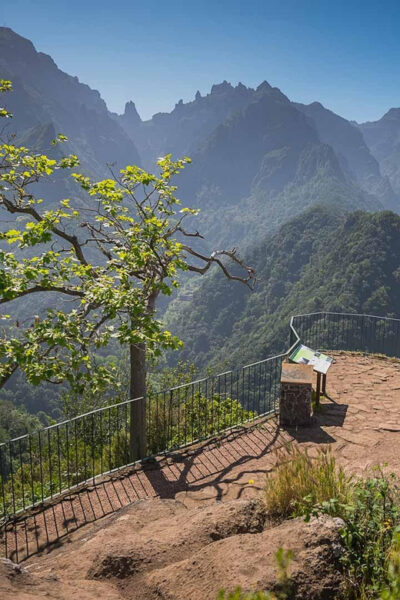
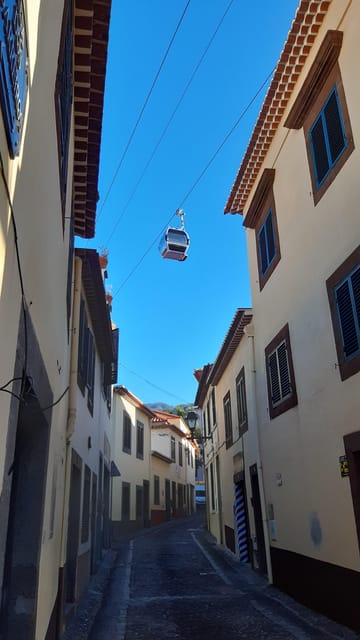
This is where you get the “oh, that’s cool” moments. A narrow street. A viewpoint that feels private. A small architectural feature that makes you stop. It’s also a nice break from the biggest crowds near the cathedral area.
These side stops are one reason the tour feels more like walking with a friend who knows the city than collecting highlights. If you want photo breaks without a rushed pace, this part helps.
Quinta das Cruzes and the climb back to Madeira’s past
Quinta das Cruzes is where the tour steps into historic gardens and a sense of continuity. It’s a place connected with older Madeira life, and you’ll also visit the Museu Quinta das Cruzes area.
Here’s the real planning detail: you need to walk up about 200 meters and then go down a staircase street to reach this site. That doesn’t mean it’s extreme, but it does mean the tour has a built-in physical element. Bring shoes with grip and be ready for stairs on uneven city surfaces.
Why it’s worth it: gardens and heritage properties in Madeira have a special relationship with the climate. Even without knowing every detail, you can feel how the landscape supports the architecture and daily rhythms. A guide helps you understand what you’re looking at and why that property mattered.
If you’re traveling with limited mobility, this is the part to think about most. Pregnant travelers and wheelchair users aren’t suitable for the tour, and it’s also not suggested for people over certain ages. Even if you’re generally fine, the stairs and steps matter.
São Pedro Church, Municipal Garden, and the path toward Sé
Along the way, the tour ties in several landmark stops that help explain Funchal’s identity. You’ll encounter the São Pedro Church, described as a baroque jewel holding centuries of history. Baroque details are often best understood when someone points out how the decoration works, so this is one of those stops where a guide pays off.
You’ll also stop at the Municipal Garden, a green oasis in the heart of the city. This is the tour’s reset button: shade, greenery, and a calmer feel after walking among streets and viewpoints.
Then you move toward the finish at Sé Cathedral do Funchal. This Gothic cathedral is a big visual anchor. It’s the kind of building that makes the earlier stops feel connected—fortress to faith to civic life, all under one skyline.
Pace, footwear, and what to bring for a comfy walk
This is a walking tour, and Madeira weather can shift. The city center flat portion is only part of the story; you’ll still deal with hills and stairways when reaching Quinta das Cruzes.
Here’s what I recommend you bring:
- Comfortable shoes with solid grip
- Water (and a plan for thirst)
- Sunscreen, sunglasses, and a sun hat
- A light layer if weather turns cool or wet
- Camera (you’ll want it)
You can also expect the tour to last about 2 hours and 30 minutes. It runs with starting times at 10 am and 11 am, Monday through Saturday.
One more practical detail: pets, bikes, baby strollers, weapons or sharp objects, and bags aren’t allowed. If you’re traveling light, great. If you’re carrying extra gear, you’ll want to rethink it before you meet up.
Price and value: how $50 stacks up in Funchal
At around $50 per person, this tour sits in the “good value” zone for a few reasons.
First, the places on the route are free of charge. So you’re not paying $50 plus entry fees. You’re paying for guided time, local context, and a route that connects landmarks to everyday life.
Second, you’re getting a local guide who has lived in Funchal for years. That matters because the best historical tours aren’t just about dates—they’re about explanations that make you notice what you’d otherwise skip. The strong feedback on Rosario is a good clue here: she’s praised for being amazing, very knowledgeable, and able to keep the tour interesting.
Third, the private group setup supports a comfortable pace. One of the best compliments you can hear is that the guide can adjust and let you go at your pace, instead of forcing everyone into a sprint.
Who should book this tour, and who might want a different plan
This is a great choice if you:
- Want a first-time-friendly walking introduction to Funchal
- Like mixing major sights with street-level details
- Enjoy history explained in a practical, human way
- Want free stops without planning entry tickets
It may not be the right fit if you:
- Need wheelchair access (it’s not suitable)
- Have trouble with stairs or hills (Quinta das Cruzes includes a staircase street)
- Are traveling with children under 6, or if you’re pregnant
- Are over the stated age limits (not suitable for people over 70 and not suitable for people over 80)
If you’re in the sweet spot physically and want a guided route that feels local, this tour is an easy yes.
Should you book this walking tour in Funchal
I’d book it if you want the best of Funchal in one neat walk: sea views at Fort São Tiago, art details on Rua Santa Maria, real local life at Lavradores Market, historic gardens at Quinta das Cruzes, and a big finish at Sé Cathedral do Funchal. The free-entry stops and the local-guide storytelling make the $50 price feel fair, not inflated.
Skip it if your priority is minimal walking or fully flat routes, since the Quinta das Cruzes approach includes steps and the tour isn’t designed for wheelchair use.
FAQ
How long is the Funchal walking tour?
It lasts about 2.5 hours, with guided visits that run for roughly 2 hours and 30 minutes.
What time does the tour start?
Starting times are 10 am and 11 am, Monday to Saturday (you’ll need to check availability for exact departures).
Where do I meet the guide?
You meet at Jardim do Almirante Reis, next to the steamship Mosquito (the displayed boat). Your guide will be holding a Portuguese flag.
Is there an entrance fee for the sights?
No. The tour visits places that are free of charge, so you won’t have to budget for entrance tickets.
What should I bring?
Bring comfortable shoes, sunscreen, sunglasses, a sun hat, a camera, and water (plus any drinks you want). Comfortable clothes help too, and a light layer may be useful if the weather is cooler or rainy.
Is this tour wheelchair accessible or suitable for young children?
No. It isn’t suitable for wheelchair users, and it isn’t recommended for children under 6. It’s also listed as not suitable for pregnant women and for people over 70/80.
More Tour Reviews in Funchal
- Funchal: Pico do Arieiro Sunrise Hiking Transfer
★ 4.8 · 4,021 reviews - Porto Moniz, Seixal, Fanal Forest, Cliff Skywalk in Open Roof 4X4
★ 5.0 · 3,631 reviews - Madeira Funchal:East Tour Pico Arieiro & Santana&Laurissilva
★ 4.9 · 1,994 reviews - Madeira Dolphin and Whale Watching on a Ecological Catamaran
★ 4.5 · 1,957 reviews - Funchal: Pico do Arieiro & Pico Ruivo Hiking Transfer
★ 4.9 · 1,845 reviews