
Review · EAST MADEIRA TOURS
Northeast 4×4 Santana and Landscapes Day Trip
Four-wheel drive plus Madeira villages in one day. This northeast 4×4 route is built for seeing the island’s wild side fast, with scenic stops, short walks, and enough time to actually look around.
I especially like the mix: quiet hillside villages in the north, then the famous Casas Típicas de Santana and rum country. The other big win is the way the driver/guide explains what you’re seeing, so the day feels less like a checklist and more like real island context.
One consideration: bottled water is listed as included, but at least one booking experience didn’t include actual bottles on arrival. I’d plan as if you’ll want to buy your own.
In This Review
- Key things you’ll notice on this 4×4 day trip
- 4×4 Northeastern Madeira: what you’re really signing up for
- Price, pickup, and group size: the practical side
- Ponta Delgada’s cliffside church and pool views
- Boaventura’s water-carved valleys and quiet farming life
- Arco de São Jorge: vineyards, mountains, and a small town vibe
- São Jorge: sugarcane fields and where Madeira’s wine starts
- Casas Típicas de Santana: triangular houses and thatch-roof detail
- Fortim do Faial: a viewpoint that still carries maritime history
- Porto da Cruz: the cross that guided explorers to the port
- Engenhos do Norte: steam engines and the rhythm of old distilling
- Caniçal: tuna fishing and the reed-rod origin of the name
- Timing and comfort for an 8-hour day
- Who should book this tour (and who might not)
- Should you book the Northeast 4×4 Santana and route?
- FAQ
- What time does the tour start?
- How long is the day trip?
- How much does the tour cost?
- Is hotel pickup included?
- Are meals included?
- Is bottled water included?
- What group size should I expect?
- Are there admission fees at the stops?
Key things you’ll notice on this 4×4 day trip
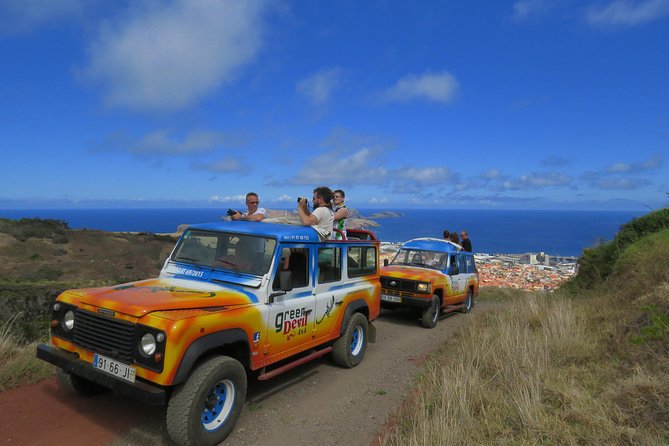
- Small group size (max 8 travelers) keeps stops calmer and easier to manage on narrow roads
- Pickup from Funchal hotels is included, and you get a true round-trip day plan
- Many short photo-friendly stops so you see several different village types without a full hike
- Rum history is hands-on with stops tied to sugarcane and the distillery work
- Four distinct village vibes—coastal church views, agricultural valleys, vineyard areas, and a tuna fishing village
- Most admissions are free at the stops, so your money goes to lunch and personal drinks
East to Santana and São Lourenço, other routes
- Madeira Funchal:East Tour Pico Arieiro & Santana&Laurissilva★ 4.9 · 1,994 reviews
- Full Day Jeep Safari East – Pico do Areeiro – Santana – Ponta de são Lourenço★ 5.0 · 819 reviews
- Funchal: Caniçal Ponta São Lourenco Hiking Transfer★ 4.9 · 756 reviews
- Madeira: PR8 -Ponta de São Lourenço Natural Reserve Transfer★ 4.9 · 392 reviews
4×4 Northeastern Madeira: what you’re really signing up for
This is a full-day loop that focuses on Madeira’s northeast—cliff-edge viewpoints, farming communities, and the kind of places people go to for daily life, not just postcards. The 4×4 part matters because it helps you reach areas that feel more remote than the roads around Funchal. Even when stops are short, the scenery changes enough that the day stays interesting.
You’ll also get a nice education built into the route. Each stop has a theme—agriculture, settlement patterns, old architecture, maritime exploration, and sugarcane-to-rum production. The guide’s job isn’t just to point. It’s to connect the dots so you understand why these places look the way they do.
Price, pickup, and group size: the practical side
At $82.82 per person for about 8 hours, this is priced like a “do a lot in one day” tour—but it also includes useful basics. You get a local guide and driver/guide, plus round-trip transportation from Funchal hotels (free within the Funchal area). If you’re staying outside Funchal, there may be an extra fuel tax.
Two details to keep in mind:
- If you’re arriving via the cruise dock, pickup has an extra €5.00 per person.
- Lunch is not included, with €12.00 per person as the stated extra.
Group size is max 8 travelers, which is a big deal on Madeira. Smaller groups tend to move faster at stops, and they’re easier for a driver to position on tight roads. If you like your day trips organized but not crowded, that cap helps.
Ponta Delgada’s cliffside church and pool views
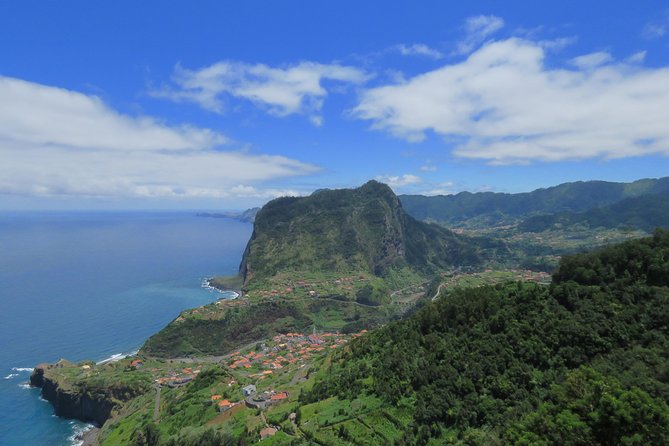
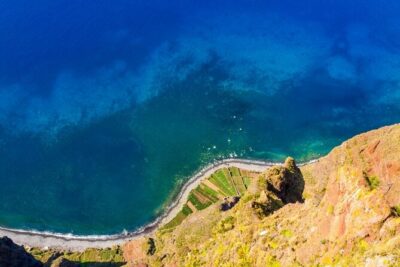
You start with Ponta Delgada, a village whose economy is tied to agriculture, small businesses, services, and tourism. The visual hook here is the cliffside position—this is one of those places where you feel the ocean “below you” rather than just “near you.”
At the stop, you’ll have time for a quick look at:
- The local church by the sea
- A newer pool complex that signals how everyday life here blends tradition with modern comforts
The benefit of starting here: you ease into the day with something scenic but not complicated. It’s a great place to get your bearings before the route shifts into more rural valleys.
Boaventura’s water-carved valleys and quiet farming life
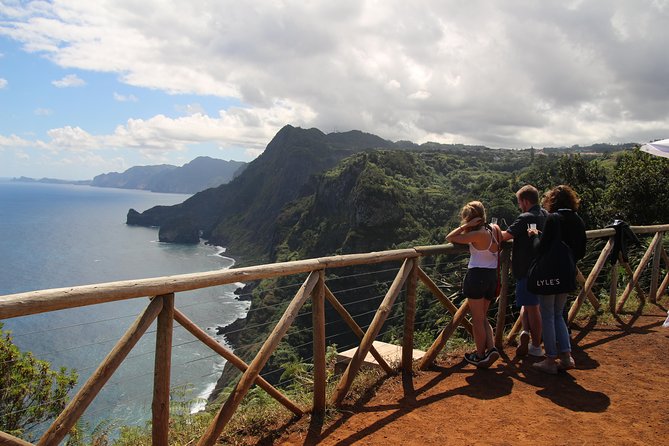
Next comes Boaventura, described as an agricultural hillside village with valleys shaped by multiple watercourses. The stop is quick, but the setting is the point: this is a community that’s older than most, and it used to be close to “off the main world” compared to busier areas.
What you should look for in the short time you have:
- How the valleys open and narrow as water runs through
- Farming patterns that fit the hillside rather than fighting it
- The overall calm—Boaventura is valued for its tranquility
Possible drawback: because the stop is short (about 10 minutes), you won’t have time for long wandering. Treat it like a “see and understand” stop rather than a “slow stroll” one.
Worth weighing up before you book this Funchal tour:
Arco de São Jorge: vineyards, mountains, and a small town vibe
Arco de São Jorge is a seaside village in Madeira’s northeast, surrounded by mountains and vineyards. The settlement is small (about 520 inhabitants), which you’ll feel in the scale. Here’s where the day starts to connect agriculture to the island’s geography.
This is also a microclimate story: the land is described as fertile enough to support many agricultural products. In other words, the island isn’t one uniform environment. It’s a set of conditions shaped by elevation, exposure, and wind.
How to use your time well: take a look outward at the mountain-and-vineyard frame, then look back toward the village. That contrast helps you understand why these communities developed where they did.
São Jorge: sugarcane fields and where Madeira’s wine starts
At São Jorge, the focus is agriculture at its most productive. The village is described as among the most fertile in the north, known especially for sugarcane and for Malvasia wine—the grape variety tied to the famous Madeira wine.
This stop is valuable even if you don’t taste anything, because it explains the chain of production behind Madeira’s most recognizable exports. If rum and wine are on your “things I’ll buy” list, this is the part of the day that gives those products context.
Small heads-up: your time here is brief (around 10 minutes). Don’t try to do everything—grab one viewpoint, note the farming patterns, and move on. The payoff comes later at the rum distillery.
Casas Típicas de Santana: triangular houses and thatch-roof detail
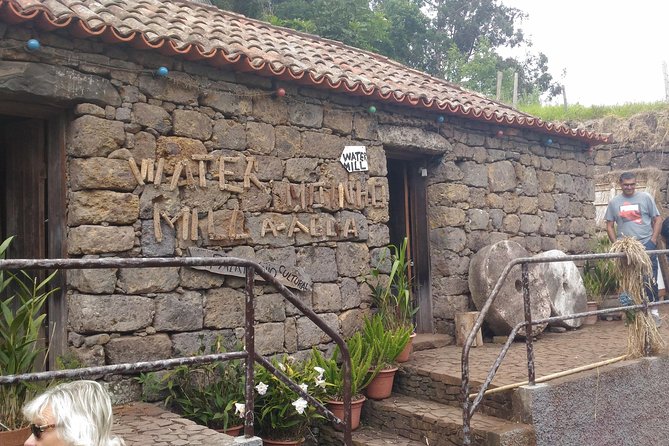
Now you hit one of Madeira’s most recognizable cultural sights: Casas Tipicas de Santana. These are colorful triangular houses made of stone with straw thatch roofs, said to originate in the 16th century and preserved today as a tourist attraction.
What I like about this stop is that it’s not just “take a photo.” It’s a chance to see architecture that reflects local materials and building needs. The triangular design and thatch roof tell a practical story—how people built for their environment.
If you’re short on time, treat this as your one “slow look” moment. Stand close enough to notice the construction, then step back for the full-house shape. That two-step approach makes the stop feel complete.
Fortim do Faial: a viewpoint that still carries maritime history
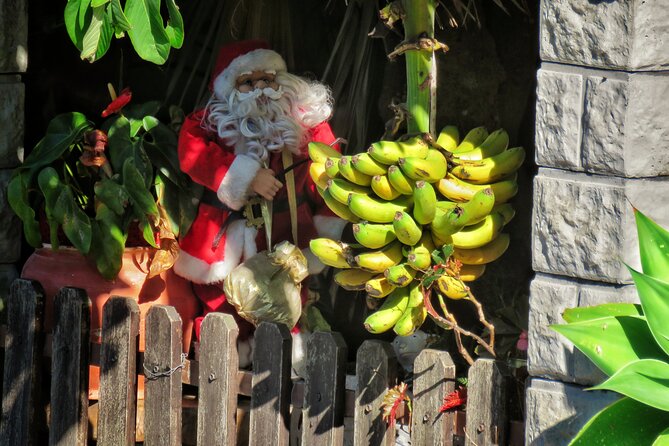
Fortim do Faial is a compact stop with real character. It was used as a viewpoint at the start of the 20th century, and it still preserves that role visually—made for looking out.
The history is specific: the fort is decorated with 10 pieces of ante-artillery, smooth-sided and of English origin, assembled in naval repairs. These pieces were traditionally used on feast days honoring Our Lady of the Nativity.
This is one of those stops where you get more than scenery. You learn that the island’s coastal identity isn’t only about shipping and fishing—it also shows up in local ceremonies and how communities marked important days.
Porto da Cruz: the cross that guided explorers to the port
Porto da Cruz brings the maritime story front and center. The village is named after a cross placed on the shore to indicate the port for Portuguese explorers. Even if you’ve seen other coastal towns, this naming detail is worth holding onto—it’s a reminder that navigation depended on physical landmarks you could see from sea.
Beyond symbolism, this stop connects to Madeira’s sugar story:
- The town processed sugarcane in a factory that’s still operating
- Rum and honey molasses production has been running since 1927
- There’s also a dry red wine called vinho seco
- A grape festival is held yearly
The stop itself is short (about 5 minutes), but you’ll understand why the next location matters. Porto da Cruz is the bridge between “farm products” and “finished goods.”
Engenhos do Norte: steam engines and the rhythm of old distilling
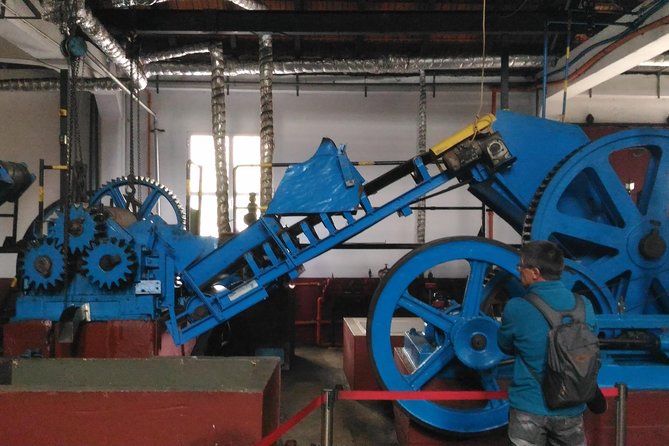
Then you go to Engenhos do Norte, the ancient rum distillery that shows why sugarcane mattered so much on Madeira. The detail I found most useful here is how the distillery is described as still operating in a way that matches the past: ancient steam engines set the working pace, and equipment is maintained so it stays functional.
This stop is where you can shift from scenic viewing to a more hands-on feel. Even if your visit is brief, the message is clear: Madeira rum wasn’t an idea. It was a whole system—machines, labor, and sugar supply.
Practical tip for your day: if you’re the type who buys bottles, this is the moment to decide what you want. After you connect the production story, you’ll taste and read labels differently back in your hotel.
Caniçal: tuna fishing and the reed-rod origin of the name
Near the end of the loop is Caniçal, a small fishing village where the main catch is tuna. The name comes from Caniço, reeds that grew in the parish’s more arid areas. Those reeds were used as fishing rods, which ties everyday tools to the landscape.
Caniçal is a good finish because it reminds you that this whole northeast route isn’t just historical. It’s still functional. Agriculture, maritime movement, and fishing all keep shaping the coastline and the village rhythms.
Timing and comfort for an 8-hour day
This tour starts at 8:30 am and runs about 8 hours. Since the stop times are often around 5 to 15 minutes, the day moves at a steady pace. That’s not a flaw—it’s part of how you cover this many different locations.
Pack for a full touring day:
- Comfortable shoes for short walks and getting on/off transport
- A light layer for sea breezes
- Sun protection for exposed viewpoints
And about drinks: bottled water is listed as included. Still, if you’re picky about having water in-hand from minute one, treat it as a bonus rather than a guarantee. I’d rather you arrive prepared than end up hunting for a bottle quickly.
Who should book this tour (and who might not)
This is a strong fit if you want:
- A one-day sampler of Madeira’s northeast (without renting a car)
- A tour that mixes agriculture, culture, and food/drink history
- A manageable group size (max 8) with explanations along the way
It may be less ideal if you want a long, slow exploration of one village. The format is “see many places” rather than “go deep in one place.” Also, if you expect lunch to be included automatically, plan for the stated €12.00 extra.
Should you book the Northeast 4×4 Santana and route?
If you’re in Madeira for a limited time, this is the kind of tour that helps you understand the island quickly. The value isn’t only in the price. It’s in how the day is structured: multiple free-admission stops, hotel pickup, and a guide who focuses on explanation rather than rushing you off the curb.
I’d book it if your ideal day includes Santana’s triangular houses, a stop tied directly to sugarcane and rum production, and viewpoints that show you how far north Madeira really reaches.
Before you go, do one smart thing: plan your hydration and lunch budget. The tour sets you up well, but that bottled-water detail can be inconsistent, so you’ll enjoy the day more if you’re not relying on it.
FAQ
What time does the tour start?
The tour start time is 8:30 am.
How long is the day trip?
The duration is about 8 hours.
How much does the tour cost?
The price is $82.82 per person.
Is hotel pickup included?
Yes—hotel pickup and drop-off is included for the Funchal area. Outside of Funchal, there may be an extra fuel tax. If you’re picking up from the cruise dock, pickup has an extra €5.00 per person.
Are meals included?
No. Food and drinks are not included, and lunch is extra at €12.00 per person.
Is bottled water included?
Bottled water is listed as included. One booking note says bottles weren’t provided when expected, so it’s smart to have a backup plan.
What group size should I expect?
This activity has a maximum of 8 travelers.
Are there admission fees at the stops?
The stop information lists admission ticket free at each listed stop, so you should not need to pay entry fees for those stops.
More 1-Day Tours in Funchal
- From Funchal: Porto Santo 1-Day Cruise and Tour
★ 4.3 · 28 reviews - Funchal 4×4 Jeep to Porto Moniz Cabo Girao and Seixal in one day
★ 5.0 · 19 reviews
More Tour Reviews in Funchal
- Funchal: Pico do Arieiro Sunrise Hiking Transfer
★ 4.8 · 4,021 reviews - Porto Moniz, Seixal, Fanal Forest, Cliff Skywalk in Open Roof 4X4
★ 5.0 · 3,631 reviews - Madeira Funchal:East Tour Pico Arieiro & Santana&Laurissilva
★ 4.9 · 1,994 reviews - Madeira Dolphin and Whale Watching on a Ecological Catamaran
★ 4.5 · 1,957 reviews - Funchal: Pico do Arieiro & Pico Ruivo Hiking Transfer
★ 4.9 · 1,845 reviews
Out East to Santana and São Lourenço
- Madeira Funchal:East Tour Pico Arieiro & Santana&Laurissilva
★ 4.9 · 1,994 reviews - Full Day Jeep Safari East – Pico do Areeiro – Santana – Ponta de são Lourenço
★ 5.0 · 819 reviews - Funchal: Caniçal Ponta São Lourenco Hiking Transfer
★ 4.9 · 756 reviews - Madeira: PR8 -Ponta de São Lourenço Natural Reserve Transfer
★ 4.9 · 392 reviews - From Funchal: Ponta de São Lourenço/Caniçal Full-Day Hike
★ 4.6 · 262 reviews
Just In: New Madeira Reviews


East Madeira Tours, compared.
 ★ 4.7Best of the East Tour from FunchalFrom $423,364 reviews
 ★ 4.9Madeira Funchal:East Tour Pico Arieiro & Santana&LaurissilvaFrom $371,994 reviews
 ★ 4.8East Madeira Island Guided Tour & Laurissilva WalkFrom $351,194 reviews
 ★ 5.0Full Day Jeep Safari East – Pico do Areeiro – Santana – Ponta de são LourençoFrom $74819 reviews
 ★ 4.6Madeira East Island Tour and Levada WalkFrom $64800 reviews
 ★ 4.9Caniçal Ponta São Lourenco Hiking TransferFrom $35756 reviews
 ★ 4.5Madeira East Tour from FunchalFrom $43455 reviews
 ★ 4.9PR8 -Ponta de São Lourenço Natural Reserve TransferFrom $35392 reviews
Browse the lists this tour appears in