
Water and green trails in one steady hike.
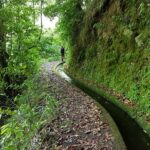
Ribeiro Frio – Portela is a levada walk where you spend hours with your eyes on flowing water and the island’s endemic forest, including Laurissilva do Til and Vinhático. You follow a channel that gently guides the route, and you may spot trout along the way, plus you get valley views and sights toward Penha d’Águia.
I especially like the sense of walking inside Madeira’s living forest, not on a showy path. And I like the “you’re always near the water” rhythm, which makes the hike feel calmer than it sounds on paper.
One thing to plan for: parts of the levada can be affected by rockfall or damage, and if access changes, some viewpoint time can disappear. Also, there are narrow sections at points, so you’ll want good balance and no fear of heights.
In This Review
- Key highlights to know before you go
- Madeira’s Levada Trail: what this walk really feels like
- From CR7 Museum to the trail: morning start and how the timing works
- The levada route through Laurissilva do Til and Vinhático
- What you’ll likely notice as you walk
- Water, valleys, and possible trout sightings
- Penha d’Águia views: when you want to be early
- Narrow paths, nerves, and footing you should respect
- Rain and slick conditions
- Portela and the endpoint mood: waterfalls and tunnels
- Price and value, plus the 3€ forestry tax starting in 2025
- Who this hike suits best (and who should think twice)
- Should you book Ribeiro Frio – Portela?
Key highlights to know before you go
- 4 hours walking on a levada route through protected forest types
- Always close to water, with the chance to see trout and small waterfalls
- Penha d’Águia views along the walk (weather and light matter)
- Short, intense payoff near the end, including small tunnels on some sections
- Small group size (max 8), which helps the pace feel manageable
- Narrow footing in places, so bring your best shoes and calm nerves
More trails, from Ribeiro Frio to the sea cliffs
- Funchal: Pico do Arieiro Sunrise Hiking Transfer★ 4.8 · 4,021 reviews
- Funchal: Pico do Arieiro & Pico Ruivo Hiking Transfer★ 4.9 · 1,845 reviews
- Funchal: Caniçal Ponta São Lourenco Hiking Transfer★ 4.9 · 756 reviews
- Madeira: PR 9 – Levada do Caldeirão Verde Hike Transfer★ 4.8 · 620 reviews
Madeira’s Levada Trail: what this walk really feels like
This is the kind of Madeira hike that doesn’t rely on cliffs, ladders, or big summit drama. The main idea is simple: you walk beside a man-made water channel, called a levada, and the route follows the landscape in a gentle, steady way. It’s a long, satisfying walk for people who like nature details and consistent scenery.
The forest you move through is the reason. You’re in an area described as well-preserved, with endemic laurel woodland types like Laurissilva do Til and Vinhático. Even if you’ve seen green forests in other places, Madeira’s laurel belt has a special feel: dense, cool, and built around slow moisture and shade. If you like to pause and watch how water shapes a place, this tour fits you well.
The trail also gives you that “valley-to-coast” feeling on good days. You’re not always looking at one view, but the route keeps offering angles that open up. And when the path is less open, you still get variety in the forest and the sound of water.
From CR7 Museum to the trail: morning start and how the timing works
Your tour meets at CR7 Museum, Praça CR7, Av. Sá Carneiro 27, São Martinho, in Funchal, with a start time of 8:00 am. The tour runs about 7 hours total, which usually means a decent chunk of driving, a 4-hour walking window, and time to return to the same meeting point.
If your goal is a relaxed start, arrive a bit early. Madeira trails can involve gates, changing conditions, and short briefing moments before you step onto the path. A small group (maximum 8 travelers) also means the schedule tends to feel tighter—everyone’s ready when the bus is ready.
Pickup is offered, so if you’re staying outside central Funchal, ask how pickup is handled. On a morning departure, being off the road and on your way early helps.
The levada route through Laurissilva do Til and Vinhático
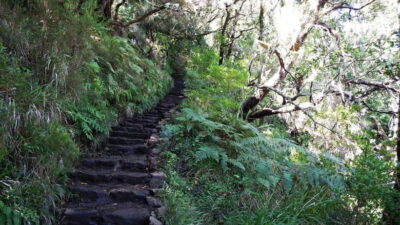
The walk is built around the levada itself. You’ll follow it alongside forest that’s described as well preserved and tied to Madeira’s endemic vegetation. That’s important because this isn’t just “green trees everywhere.” You’re walking through a protected-style ecosystem where the water channel created a walkway that locals and visitors still use.
I like routes like this because you get a quieter kind of connection. Instead of chasing views every ten minutes, you’re noticing shade, texture, and how the vegetation changes as the water route moves through valleys.
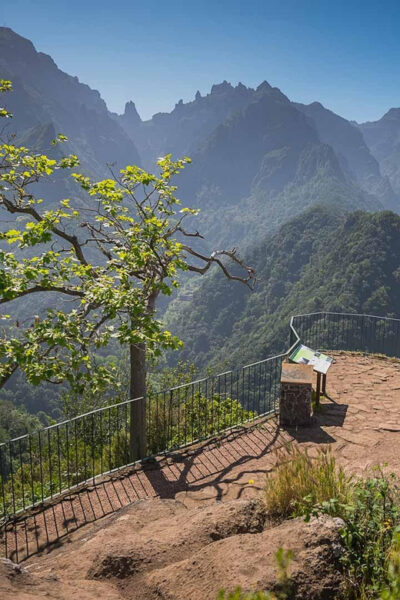
There are also moments where the forest thins a little or the path levels enough that you can see farther. That’s when the scenery shifts from “forest closeness” to “look outward,” toward Penha d’Águia and the broader valley shapes.
What you’ll likely notice as you walk
- Dense, shaded sections that make the route feel cooler
- Water sound as a steady background cue
- Spots where the trail edges feel tighter than you expect
- Occasional openings where the valley view snaps into place


Water, valleys, and possible trout sightings
The levada “gently carries the water along the entire route,” so you’re rarely far from the moving stream. That matters because it changes the whole hiking mood. Instead of only seeing water at a waterfall crossing, you get water presence for most of the walk.
You can also see trout from time to time. I wouldn’t plan this like a guaranteed wildlife encounter, but if you slow down near calmer spots and look where the water is visible, you stand a better chance. Madeira’s streams can be clear enough to make fish spotting possible for short moments.
Along the route, you may also notice small waterfall moments. One of the best descriptions of this walk includes multiple waterfalls along the levada, plus lots of green as you approach Portela. In plain terms: you get frequent “oh, there’s water too” moments, which is a big part of why this trail works as a nature hike rather than a transfer from A to B.
Penha d’Águia views: when you want to be early
This tour includes fantastic views over Penha d’Águia. The quality of that view depends on the day—fog and low cloud can flatten everything, and clear skies make the route feel even longer in the best way.
If you’re trying to avoid the more crowded-feeling moments (especially around viewpoint sections), go into the walk with an early mindset. One review mentioned leaving for a viewpoint later than ideal and finding it got busy after. That fits how Madeira hikes often go: the scenery draws people, and a small delay can mean less solitude.
You don’t need to sprint. But you’ll enjoy it more if you keep your pace steady and don’t wander too long before the viewpoint areas.
Narrow paths, nerves, and footing you should respect
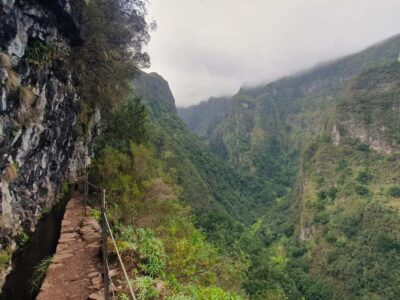
This isn’t a “wide sidewalk” kind of walk the whole time. Some sections can be narrow and run along the levada. If you’re the type who gets uneasy on tight trails, you should take that seriously.
One review specifically called out that sure-footing is required and that dizziness awareness matters. Another mentioned narrow ways along the levada. So the practical advice is simple: wear shoes with grip, stay focused on your steps, and don’t rush the narrow segments.
If you’re comfortable hiking on forest paths, you’ll likely be fine. But if you normally stick to easy, wide trails, this one asks a little more of you—mostly in the “place your foot carefully” department.
Rain and slick conditions
The data doesn’t spell out trail surface type, but levada walks can be slick when wet. If rain hits Madeira, assume the edges and shaded stretches can get slippery. Plan to move slowly in those areas.
Portela and the endpoint mood: waterfalls and tunnels
The walk finishes at Portela, which connects you toward the Porto da Cruz area. The best part of this ending is that the levada doesn’t become boring just because you’re near the end. Descriptions include a route that remains scenic and continues to deliver water features as you approach the descent.
One standout detail from the walk’s later sections: small tunnels. These short passages can be a highlight because they change the feel of the hike. Instead of open air, you get a brief, cool, enclosed moment, then step back out into the greenery and light. If you like small variations that break up long stretches, those tunnels add real character.
Also watch for the way the water behaves as the trail nears the end. Some routes have more visible drops and breaks in flow, which can create more frequent waterfall “notches” along the way.
Price and value, plus the 3€ forestry tax starting in 2025
The price is $54.41 per person, and you’ll be picked up and taken by air-conditioned vehicle. That’s a real value point because you’re not responsible for figuring out transport from central Funchal on your own.
Still, you need to budget the extra 3€ per person forestry tax that started January 1, 2025. It’s described as a fee for waste collection and cleaning of classified pedestrian trails, and it is not included in the tour price. You pay it on the day, at the place of the walk.
So when you judge value, do the math: base cost plus that day fee, and also remember lunch isn’t included. If you like eating during a hike day, plan for snacks or a simple meal after. If you pack your own water and small food, you’ll keep the day comfortable and avoid the “hangry midway” problem.
In short: the money mostly buys you transport, organization, and time on a scenic protected trail. The pay-off is the 4-hour levada experience itself.
Who this hike suits best (and who should think twice)
This tour is listed for travelers with moderate physical fitness. That usually means you’re walking for hours, not sprinting or climbing walls, but you should be able to handle uneven ground and steady time on your feet.
You’ll likely enjoy it if you:
- Like forest walking and water sounds
- Want a calmer nature route with views plus greenery
- Prefer small groups (max 8)
- Are comfortable on narrower paths
You should think twice if you:
- Have a strong fear of narrow trails or heights (even if the route is described as gentle in overall spirit)
- Don’t handle walking for several hours well
- Get easily unsettled by uneven footing
Also keep a realistic expectation: trail access can change after landslides. One review described partial closure and a replacement route that lacked viewpoints. That doesn’t mean it will happen to you, but it’s a good reason to stay flexible and keep an eye on local conditions the day of your hike.
Should you book Ribeiro Frio – Portela?
Book it if you want a well-paced Madeira levada walk with protected laurel forest, water presence for most of the hike, and the kind of scenery that rewards slow looking. The small group size and the included air-conditioned transport from CR7 Museum help it feel easy to manage.
Skip it (or at least re-think the plan) if your biggest priority is guaranteed, uninterrupted viewpoints. Trail access can change after damage, and some route alternatives may not deliver the same payoff. If you’re flexible and focus on the walk itself, you’ll have a better day.
If you do book, go prepared for the narrow sections, budget the 3€ forestry tax, and treat the day like a nature outing, not a quick photo stop.
More Tour Reviews in Funchal
- Funchal: Pico do Arieiro Sunrise Hiking Transfer
★ 4.8 · 4,021 reviews - Porto Moniz, Seixal, Fanal Forest, Cliff Skywalk in Open Roof 4X4
★ 5.0 · 3,631 reviews - Madeira Funchal:East Tour Pico Arieiro & Santana&Laurissilva
★ 4.9 · 1,994 reviews - Madeira Dolphin and Whale Watching on a Ecological Catamaran
★ 4.5 · 1,957 reviews - Funchal: Pico do Arieiro & Pico Ruivo Hiking Transfer
★ 4.9 · 1,845 reviews
More Madeira Walks on Foot
- Funchal: Pico do Arieiro Sunrise Hiking Transfer
★ 4.8 · 4,021 reviews - Funchal: Pico do Arieiro & Pico Ruivo Hiking Transfer
★ 4.9 · 1,845 reviews - Funchal: Caniçal Ponta São Lourenco Hiking Transfer
★ 4.9 · 756 reviews - Madeira: PR 9 – Levada do Caldeirão Verde Hike Transfer
★ 4.8 · 620 reviews - PR1 Sunrise Pico do Arieiro Self-Guided Hiking Transfer
★ 5.0 · 299 reviews
Just In: New Madeira Reviews

Madeira Hiking & Nature Walks, compared.
 ★ 4.8Pico do Arieiro Sunrise Hiking TransferFrom $384,021 reviews
 ★ 4.6Pico Arieiro to Pico Ruivo HikeFrom $542,224 reviews
 ★ 4.9Pico do Arieiro & Pico Ruivo Hiking TransferFrom $371,845 reviews
 ★ 4.8Rabaçal: 25 Fontes & Risco Levada Hiking TransferFrom $401,670 reviews
 ★ 4.8Pico Do Arieiro Pico Ruivo Sunrise or Morning Hike TransfersFrom $371,169 reviews
 ★ 4.9Caldeirão Verde: Levada Caldeirao Verde Hiking TransferFrom $391,071 reviews
 ★ 4.8Sunrise at Pico do Arieiro & Hike Larano trailFrom $53951 reviews
 ★ 4.9Caniçal Ponta São Lourenco Hiking TransferFrom $35756 reviews
Browse the lists this tour appears in