
Review · MADEIRA SURF LESSONS
Funchal: Madeira Island Group Surf Lesson
First waves in Madeira feel unreal. This 4-hour Atlantic surf lesson gets you out into real swells after a beach warm-up and technical demo, with João (Johnny)-style coaching that focuses on letting you progress fast. I love that you’re sent to beginner-friendly surf spots around the island, including Praia do Seixal, Praia de Machico, and Porto da Cruz, instead of just circling the same shoreline.
I also like the way the instruction is geared to your level, so it’s not just a scenic activity. One session result sticks in my mind: an experienced-leaning family went from first attempts to standing confidently after just a few hours, and the adults weren’t left behind either. A reasonable consideration: group size can run bigger than you’d expect, especially when conditions force schedules to change.
In This Review
- Key points
- Madeira Surf Lesson: What You’re Paying For (and What You Actually Get)
- Choosing the Right Spot: Seixal, Machico, and Porto da Cruz
- The 4-Hour Flow: From Beach Demo to Your First Waves
- Instructor Coaching That Builds Confidence (Not Just Entertainment)
- Cold Atlantic, Real Safety, and How to Prepare Your Body
- Logistics Made Simple: Pickup, Equipment, and What’s Included
- Where This Fits Best: First-Timers, Families, and Repeat Surf Days
- Value Check: Is $100 Worth It in Madeira?
- Should You Book This Madeira Surf Lesson?
- FAQ
- Where does the surf lesson take place in Madeira?
- How long is the surf lesson?
- How much does it cost?
- Is transportation included?
- What surf equipment is provided?
- Do I need to bring my own food and drinks?
- What should I bring with me?
- What languages do the instructors speak?
- What if weather or sea conditions cancel the activity?
Key points
- Porto da Cruz, Machico, and Seixal options: you’re taken to beginner-appropriate spots when tides and weather cooperate.
- Beach technical demo first: you get warm-up and instruction before you paddle out.
- Small-coach feel, when conditions allow: some groups run about 4 students per instructor, with more attention possible.
- Cold-water reality: wetsuits help, but you’re still going to feel the Atlantic. Plan to dress and snack like it matters.
- You’re learning the sport from experts: instructors are described as patient, safety-focused, and fun without rushing you.
Catch a few more on the north-coast breaks
- Madeira: Surf Lessons for All Levels★ 4.8 · 191 reviews
- Surfing Lessons in Madeira★ 5.0 · 168 reviews
- Madeira Surfing Lessons – Aroundfreedom Surf School★ 5.0 · 104 reviews
- Madeira: surf lesson at Porto da Cruz★ 4.8 · 67 reviews
Madeira Surf Lesson: What You’re Paying For (and What You Actually Get)
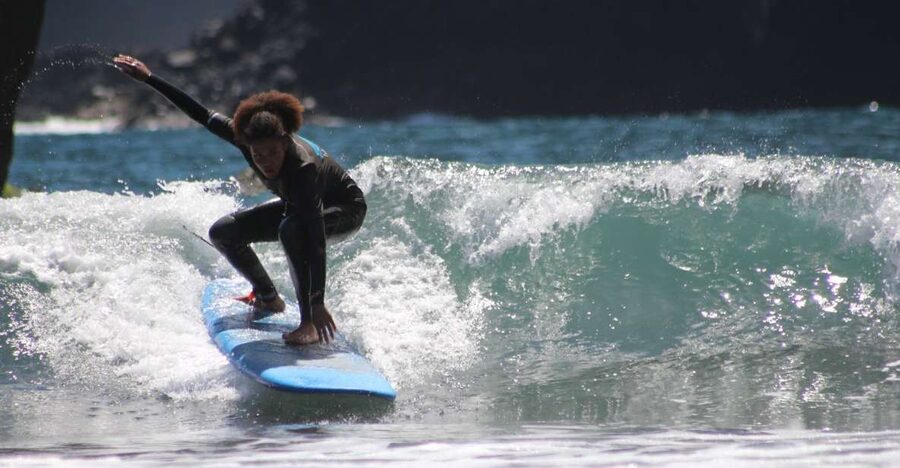
At $100 per person for a 4-hour session, you’re not buying “a ride to the beach.” You’re buying coaching time plus the gear plus the whole day’s logistics handled for you: transport to the beach, surf equipment (wetsuit, surfboard, etc.), insurance, and an instructor.
That pricing makes sense because surfing is one of those sports where setup and guidance change the whole experience. If you’ve never done it, the difference between flailing and catching usable waves is mostly instruction—where to place your body, when to go, and how to stay safe when the ocean gets its say. If you’ve surfed before, you still benefit because you’re practicing in real conditions on the Madeira coast, guided by someone who knows what beginners can handle.
You’ll also get a clear value signal from how people describe the learning outcome. In the feedback, first-timers routinely mention standing on the board by the end of the session, and parents mention their kids progressing surprisingly quickly. That’s the kind of payoff that turns a “try it” activity into something you want to repeat.
Choosing the Right Spot: Seixal, Machico, and Porto da Cruz
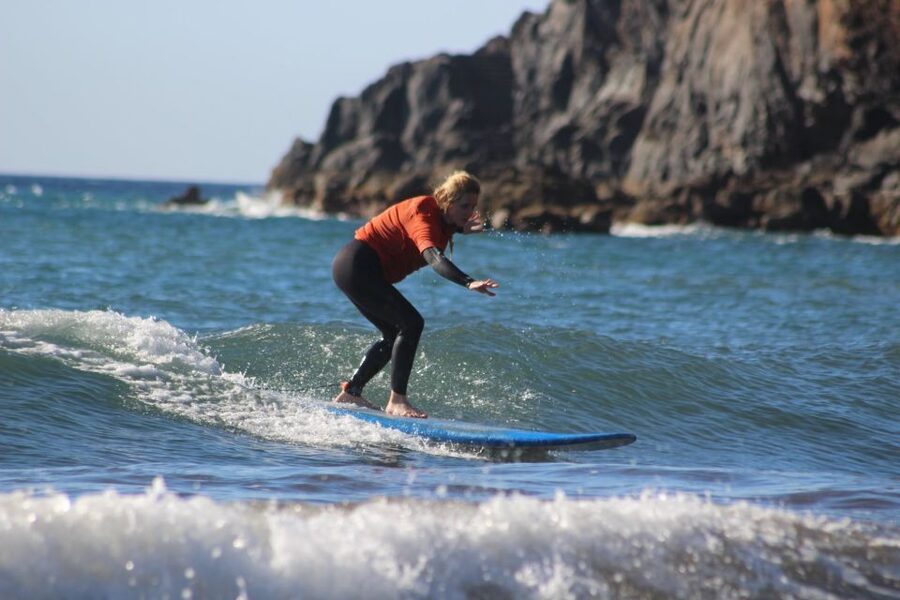
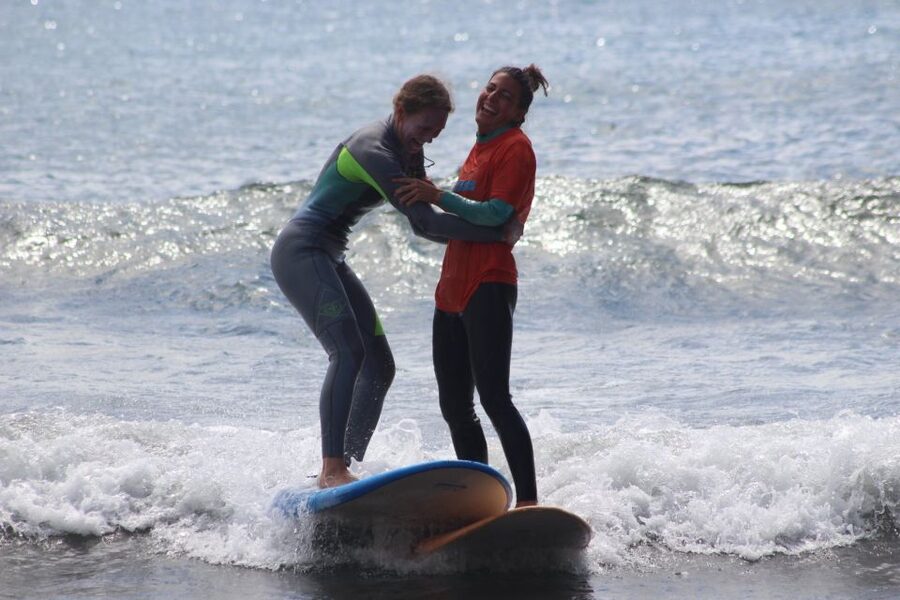
This lesson is built around going where the waves and conditions suit your level. The activity highlights Porto da Cruz and Machico, but it can also include Praia do Seixal and Praia de Machico depending on what’s working that day.
Here’s why that matters for you: Madeira’s coast isn’t one uniform surfing scene. Some beaches can be more manageable for beginners at certain tides or winds. Instead of forcing everyone into one location and hoping for the best, the instructors shift to the top beginner-friendly spots. That approach is especially helpful if you’re learning for the first time, because your session time should be spent practicing, not waiting.
Porto da Cruz and Machico show up again and again in the experience descriptions. People call out those areas specifically for being great surf settings for early-stage learners—places where you can get in the water, try again, and build confidence. And because your plan is flexible, you’re not locked into one beach when weather or sea conditions change.
One practical note: your exact class time can be morning or afternoon, based on tides, sea, and weather. The instructor contacts you to arrange the pickup time, so expect a schedule that reacts to the ocean instead of fighting it.
The 4-Hour Flow: From Beach Demo to Your First Waves
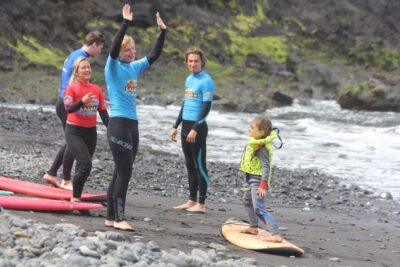
The rhythm of the lesson is simple and effective: warm up and a technical demonstration on the beach, then hit the water to catch waves. In other words, you don’t just get handed a board and told to go have fun.
A typical session feels like this:
- Start on land: You warm up and get a technical demonstration so your first attempts aren’t random. This matters because surfing rewards timing and body position.
- Transition to the water: You gear up and practice in the Atlantic with help from your instructor.
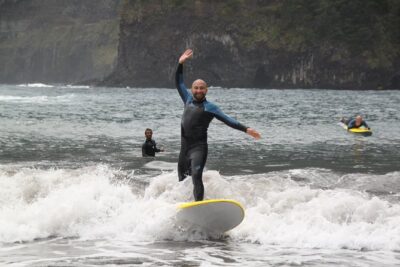
- Then the real work: You paddle, set up, and catch waves as you improve. People describe a jump in adrenaline as soon as the first successful ride happens.
- Session finishes with you leaving better than when you started: Multiple accounts mention that by the end, even beginners are standing and riding more confidently than they expected.
You’ll feel the water temperature in Madeira’s Atlantic, so the session’s structure also helps: you’re coached on what to do and when, so you can spend less time guessing and more time actually learning. Plus, since the lesson is only 4 hours, there’s a natural momentum. You’ll cycle through attempts, feedback, and corrections without dragging the day into something that feels endless.
Also, you should plan your energy. The lesson includes equipment, but it doesn’t include food or drinks. Bring snacks and water so you don’t end up hungry, shaky, or too tired to focus when you need to.
Instructor Coaching That Builds Confidence (Not Just Entertainment)
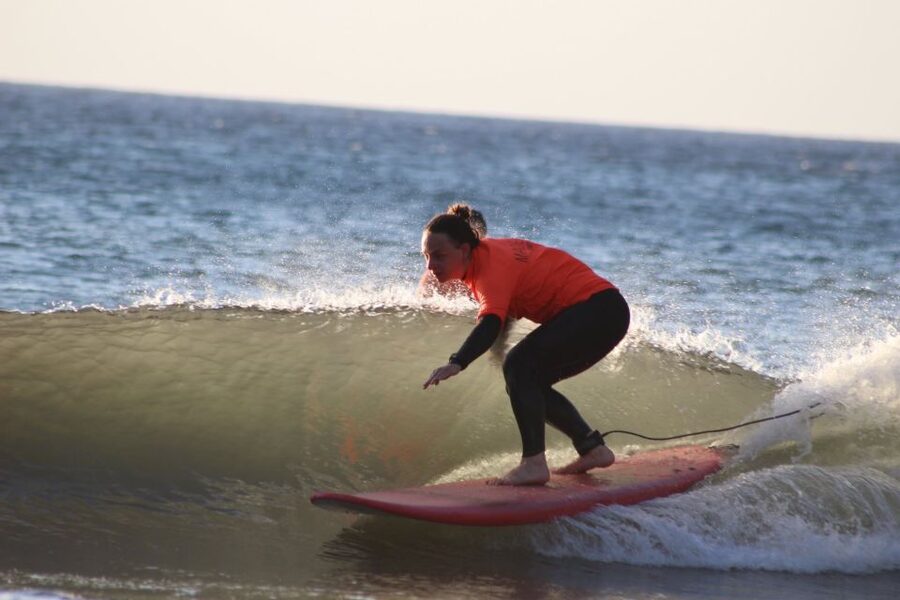
The biggest “make or break” factor for surfing lessons is the instructor. In this experience, the names that repeatedly show up—like João (Johnny) and Kaja—are associated with a teaching style that’s patient, safety-first, and tuned to the group.
What that looks like in practice:
- You get clear explanations that help you understand what to do before you try.
- You get encouragement without being ignored.
- You receive feedback that helps you improve ride after ride.
Several descriptions mention that the instructors take time for individual struggles, not just general tips. That’s especially relevant if you’re traveling with mixed skill levels or you’re the one who tends to get overwhelmed in active, noisy environments. Surfing is physical, but it’s also mental—confidence matters.
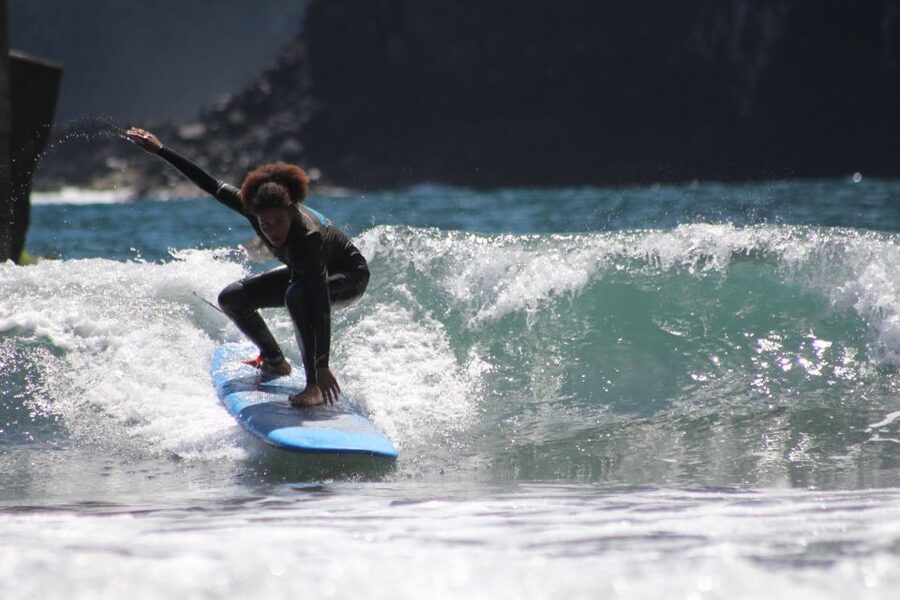
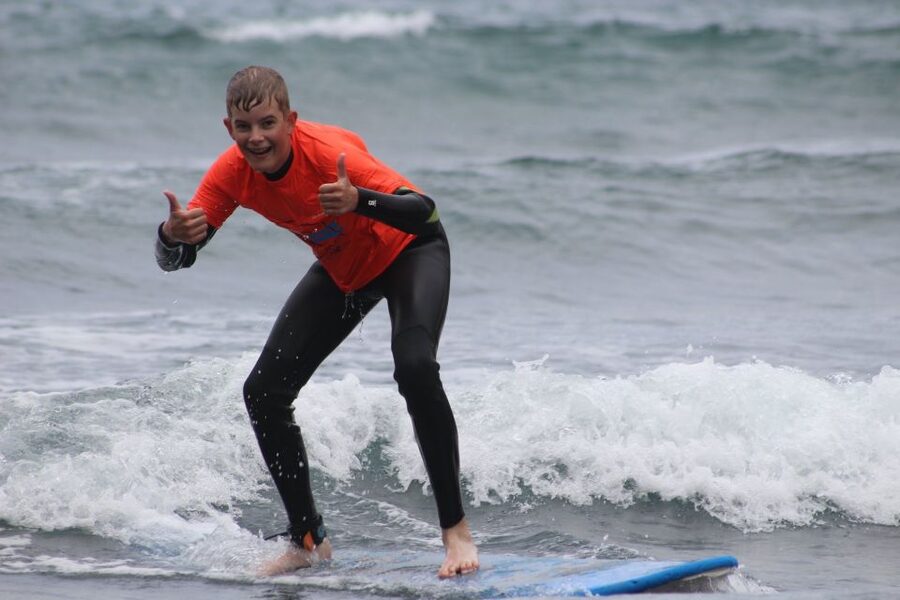
One detail I really like is how people describe learning outcomes even for kids and adults. A 13-year-old standing confidently after a few hours is exactly what you want to hear if you’re choosing a lesson for family fun. And adults reporting independent wave rides signal that the coaching isn’t only for beginners—it’s for helping you progress from where you are.
One caution, though: group size can vary. In at least one experience, a group combined into 10–11 people with two instructors, which created less one-on-one attention than you’d prefer. In other sessions, people report around 4 students per instructor, which naturally allows more individualized corrections. So set your expectation: your personal coaching time can depend on how many other people are in the water that day.
Worth weighing up before you book this Madeira tour:
Cold Atlantic, Real Safety, and How to Prepare Your Body
Madeira surfing sounds carefree. In reality, it’s still the ocean. That’s why safety coaching and preparation matter.
This lesson includes wetsuits and boards, and people repeatedly mention that they never felt unsafe due to instructor professionalism. Several notes also highlight how instructors stayed in the water as needed, even in cold conditions, and still managed to keep the mood upbeat and instructional. That’s a big part of why beginners walk away feeling proud instead of spooked.
To make the day go smoothly, follow the “bring list” and treat it like part of the plan:
- Swimwear (under your wetsuit)
- Towel
- Snacks and water
- Sunscreen
- Comfortable shoes
- Anything else you’d normally need to feel human again after being in the sea
Cold water changes how you feel. Your hands go less cooperative, your brain wants to rush, and you may lose stamina faster. Your best defense is simple: eat a snack early, stay hydrated, and keep your recovery gear ready so you can warm up after each stretch in the water.
Also, timing is weather-dependent. Your lesson can switch between morning and afternoon based on sea conditions. If you’re the type who needs a strict schedule, that flexibility is worth knowing ahead of time.
Logistics Made Simple: Pickup, Equipment, and What’s Included
This is one of the more “hands-off” active days you can do on Madeira. You get:
- Transportation to the beach
- Surfing equipment like wetsuit and surfboard
- Insurance
- Instructor
So you’re not renting gear, hunting a meeting point, or trying to figure out where everyone else is already geared up. The instructor will also coordinate your pickup time, since the lesson timing depends on tides, sea, and weather.
There’s also a practical language plus here: instructors operate in German, Portuguese, and English. If you’re comfortable in English, you should be able to follow instructions easily. If you prefer another language, that flexibility can reduce the stress of learning something new in a second language.
One small “expectation check”: the experience doesn’t include food and drinks, so you’ll want to bring your own. People highlight that they had fun and stayed focused, which usually comes back to not getting hungry midway through a physically demanding session.
Where This Fits Best: First-Timers, Families, and Repeat Surf Days
If you’re deciding whether to book, think about what you want from your Madeira trip. This lesson is a good match if you want:
- A beginner-friendly way to learn surfing in real Atlantic conditions
- A structured session with a beach demo, not just paddling around
- A practical adventure that still lets you explore the island afterward
It’s also a strong choice for families. In the feedback, parents mention kids progressing fast. That’s the best kind of family travel success: everyone gets something real, not just a photo and a tired return to the hotel.
What about more experienced surfers? You might find it useful as a confidence-builder and a way to learn how the instructors shape coaching for your level. The activity is described as suitable across skill levels, and instructors make an effort to help each person reach their best within the time.
If you’re a total beginner, you’ll likely appreciate the learning pace. If you’re someone who hates waiting, be aware that surf conditions can shift the exact spot and timing, and group size can sometimes increase when schedules combine. But the overall message is that instruction stays focused on safety and improvement.
Value Check: Is $100 Worth It in Madeira?
In Madeira, $100 sounds like a “yes or no” moment. The reason it can be worth it is that you’re paying for multiple things at once:
- coaching from an instructor (not just supervision),
- gear and wetsuits,
- transport to the beach,
- and insurance coverage.
If you tried to recreate that yourself—gear rental, transport, and a coach—you’d likely spend similar money while still taking on more stress. Here, the structure does the heavy lifting.
You also get evidence of strong outcomes. People report standing on the board within hours, and even adults catching their first waves independently. That’s hard to fake and usually points to a teaching style that works.
The best way to judge value for yourself: ask whether you want an activity where you leave with a skill moment. This lesson is built for that. Even if you don’t become a surfer-pro, the goal is that you experience the fundamentals with guidance and walk away confident enough to try again.
Should You Book This Madeira Surf Lesson?
Book it if you want a fun, real-skill ocean day with expert instruction, equipment handled for you, and chances to surf Praia do Seixal, Praia de Machico, or Porto da Cruz depending on conditions. It’s especially good for first-timers, and families will likely enjoy how quickly confidence can build when coaching stays patient and safety-focused.
Hold off or set expectations if you know you’ll be upset by schedule flexibility (morning vs. afternoon based on tides and weather) or if you prefer very small groups. Some sessions can combine groups, so personal coaching time may vary.
If Madeira is your one chance at surfing, this is a solid way to make it count. The ocean will do what the ocean does. Your job is to show up with swimwear, sunscreen, snacks, and a towel—and let the instructors handle the rest.
FAQ
Where does the surf lesson take place in Madeira?
The lesson takes place in the Atlantic waters off Madeira Island, with surf spots including Porto da Cruz and Machico. It may also use other beginner-friendly beaches such as Praia do Seixal and Praia de Machico.
How long is the surf lesson?
The duration is 4 hours.
How much does it cost?
The price is $100 per person.
Is transportation included?
Yes. Transportation to the beach is included.
What surf equipment is provided?
Surfing equipment such as a wetsuit and surfboard is provided as part of the lesson.
Do I need to bring my own food and drinks?
Yes. Food and drinks are not included, so bring snacks and water.
What should I bring with me?
Bring comfortable shoes, swimwear, a towel, snacks, sunscreen, and water.
What languages do the instructors speak?
The instructor speaks German, Portuguese, and English.
What if weather or sea conditions cancel the activity?
If the lesson can’t run due to tides and weather conditions, you’ll receive a refund or an alternative date, depending on what’s available.
More Workshops in Madeira
- Madeira: Surf Lessons for All Levels
★ 4.8 · 191 reviews - Surfing Lessons in Madeira
★ 5.0 · 168 reviews - Madeira Surfing Lessons – Aroundfreedom Surf School
★ 5.0 · 104 reviews - Madeira: surf lesson at Porto da Cruz
★ 4.8 · 67 reviews - Surf lesson in Madeira
★ 4.8 · 55 reviews
More Tour Reviews in Madeira
- From Funchal: Ecological Catamaran Dolphin Whale Watching
★ 4.5 · 8,204 reviews - Madeira: Skywalk, Porto Moniz, Seixal, and Fanal 4WD Tour
★ 4.9 · 7,905 reviews - Funchal: Dolphin and Whale Watching Catamaran Cruise
★ 4.5 · 5,697 reviews - Funchal: Enchanted Terraces, Porto do Moniz & Fanal 4WD Tour
★ 4.8 · 4,930 reviews - From Funchal: Best of Madeira’s West Tour
★ 4.7 · 3,463 reviews
More Surf Lessons in the Swell
- Madeira: Surf Lessons for All Levels
★ 4.8 · 191 reviews - Surfing Lessons in Madeira
★ 5.0 · 168 reviews - Madeira Surfing Lessons – Aroundfreedom Surf School
★ 5.0 · 104 reviews - Madeira: surf lesson at Porto da Cruz
★ 4.8 · 67 reviews - Surf lesson in Madeira
★ 4.8 · 55 reviews
Just In: New Madeira Reviews


Madeira Surf Lessons, compared.
 ★ 4.8Surf Lessons for All LevelsFrom $82191 reviews
 ★ 5.0Surfing Lessons in Madeira168 reviews
 ★ 5.0Madeira Surfing Lessons – Aroundfreedom Surf SchoolFrom $72104 reviews
 ★ 4.8surf lesson at Porto da CruzFrom $7667 reviews
 ★ 4.8Surf lesson in MadeiraFrom $8855 reviews
 ★ 4.8Surfing Experience for allFrom $7636 reviews
 ★ 5.0Madeira Surf Classes in PortugalFrom $8425 reviews
 ★ 5.0Surf Lessons Tailored to Your Skill Level in MadeiraFrom $7218 reviews
Browse the lists this tour appears in